Metro Vancouver's rental vacancy rate has hit 3.7% -- the highest since 1988. Rents are falling across the region, landlords are offering free months, and the rental market has flipped in favour of tenants. Here's what's driving the shift and what it means for renters, landlords, and condo investors.
I have been watching Vancouver’s rental market for 20 years, and I have never seen anything quite like this. For the better part of a decade, the story was the same: sub-1% vacancy, bidding wars on apartments, and rents that climbed every single year. That story is over.
According to the CMHC 2025 Rental Market Report, Metro Vancouver’s purpose-built rental vacancy rate hit 3.7% — the highest level since 1988. That is nearly 40 years. The vacancy rate was 1.6% just one year earlier, and below 1% in 2022 and 2023. If you are a renter, this is genuinely good news. If you are a landlord or condo investor, it is time to pay attention.
Where Rents Are Actually Falling
The numbers are real, and they are not small.
According to Rentals.ca’s January 2026 report, Vancouver apartment rents averaged $2,630 per month — the lowest since February 2022. That is a 9.2% decline year-over-year and 16.5% below where they were in January 2023. Vancouver has now posted 26 consecutive months of annual rent declines.
Here is the breakdown by unit type:
| Unit Type | Average Asking Rent (Jan 2026) | Year-over-Year Change |
|---|---|---|
| 1-bedroom | $2,362 | -6.3% |
| 2-bedroom | $3,279 | -4.8% |
| All apartments | $2,630 | -9.2% |
Source: Rentals.ca January 2026 Rent Report
But the drops are not evenly distributed. Some neighbourhoods are seeing much steeper declines.
The Steepest Declines
Liv.rent’s February 2026 data paints a sharper picture when you look neighbourhood by neighbourhood:
| Area | 1-Bed Rent (Feb 2025) | 1-Bed Rent (Feb 2026) | Change |
|---|---|---|---|
| Downtown Vancouver | $2,706 | $2,457 | -9% |
| West End | $2,562 | $2,337 | -9% |
| Surrey City Centre | $1,984 | $1,701 | -14% |
| Abbotsford | $1,669 | $1,496 | -10% |
Source: liv.rent via Daily Hive, February 2026
Surrey City Centre stands out — a 14% drop. That is nearly $300 per month off a one-bedroom. Burnaby family-sized units are down 10%, with the Brentwood area alone seeing two-bedrooms fall from $3,377 to $3,025.
The BC Minister of Housing’s January 2026 statement put the broader picture in context: BC apartment asking prices are down 12.1% over three years. Vancouver specifically is down 7.9% year-over-year and 13.8% over three years. New Westminster is down 15.4% year-over-year. Coquitlam, down 14%.
One detail from that statement stuck with me: a teacher named Chase Thomson renegotiated his rent down $300 per month because asking prices had dropped around him. That is $3,600 per year back in his pocket. If you are a renter and you have not had a conversation with your landlord about your renewal rate, now is the time.
Why This Is Happening: Two Forces Colliding
The 3.7% vacancy rate did not appear from nowhere. Two things happened at the same time, and their combined effect has been dramatic.
Force 1: New Supply Finally Showed Up
For years, the conversation in Vancouver housing was “where is the supply?” Well, it arrived. All at once.
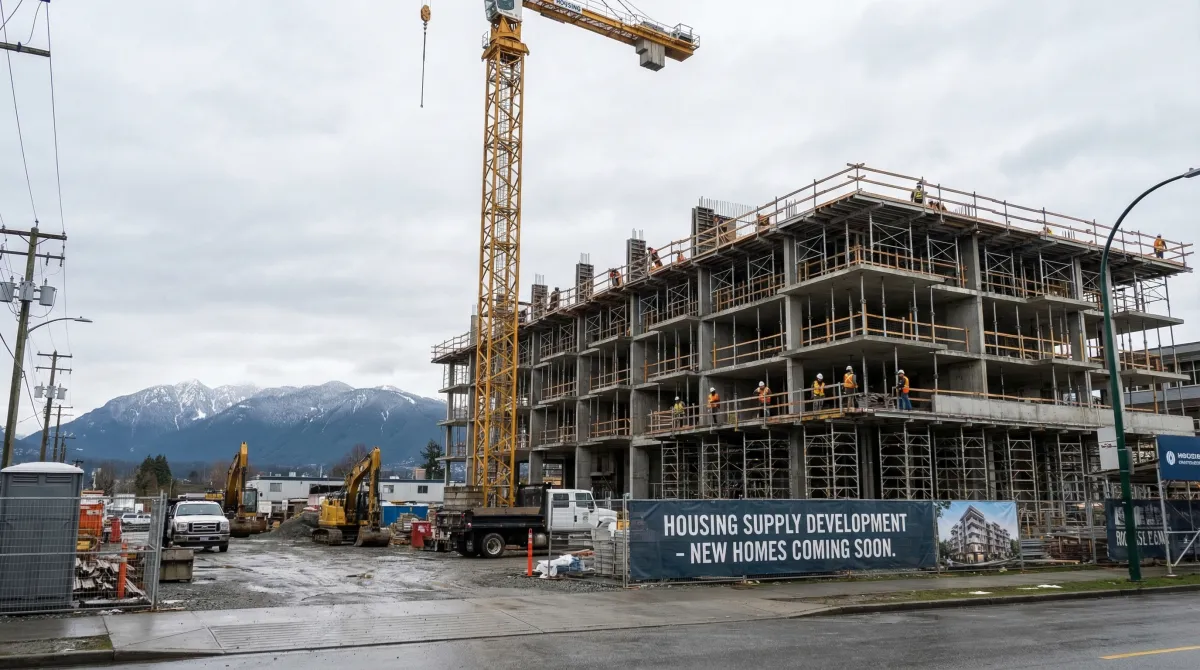
The BC government reported that 25,855 purpose-built rental homes were registered in 2025 — roughly a 40% increase over 2024. These are projects that broke ground three, four, even five years ago. The construction pipeline does not respond to today’s market. It responds to decisions made half a decade ago.
And more is coming. The Senakw development — the Squamish Nation’s 6,000-unit rental project near the Burrard Bridge — will begin first move-ins in June 2026 with 1,408 units in Phase 1. That is a single project adding more units than most municipalities see in a year.
Force 2: Demand Dropped Off a Cliff
While supply surged, demand went the other direction. Statistics Canada reported that Canada’s population actually decreased by 76,068 people in Q3 2025 — the first quarterly population decline in recent memory. Net migration was negative 94,000. More people left Canada than arrived, overwhelmingly temporary residents.
The federal government’s immigration levels plan slashed temporary resident admissions from 673,650 in 2025 to a target of 385,000 in 2026 — a 43% reduction. Study permit holders, work permit holders, and international students are the demographics that disproportionately rent. When their numbers dropped, so did rental demand.
I want to be careful here. I am not making a political argument about immigration levels. But the math is straightforward: fewer people needing housing equals more vacant units. That is exactly what happened.
The Affordability Paradox: Still Tight Where It Matters Most
Here is where I feel genuinely conflicted about the headline numbers.
A 3.7% overall vacancy rate sounds like the rental crisis is easing. And for market-rate renters earning middle incomes, it is. You have more options, more bargaining power, and landlords who will negotiate.
But CMHC’s own data shows that only 1-2% of rental units affordable to lower-income households are vacant. The vacancy is concentrated in newer, more expensive buildings — the $2,400 one-bedrooms, not the $1,200 ones. If you are making $45,000 a year, a 9% drop on a $2,700 apartment still leaves you paying $2,457. That is not affordable.
Two-bedroom and larger units face the tightest constraints. Families on modest incomes are not the ones benefitting from landlord incentives on glass-tower studios.
So yes, the market is softening. But “soft for whom?” is the right question. The relief is real for middle-income renters. For lower-income households, the crisis has barely budged.
What Landlord Incentives Look Like Right Now
If you have been paying attention to rental listings since late 2025, you have probably noticed something new: incentives.
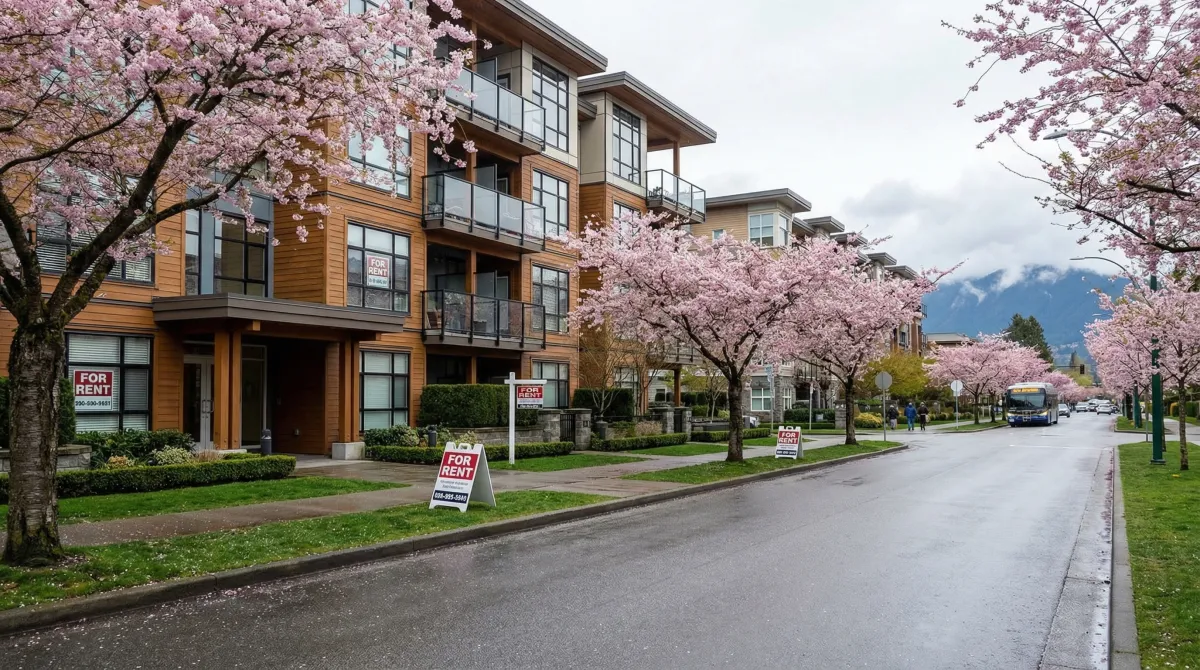
According to CMHC’s 2025 report, property operators — particularly in newer buildings — are offering one to two months of free rent to offset longer lease-up periods. This was unheard of two years ago. I personally know of buildings in Mount Pleasant and the Cambie Corridor where leasing agents are offering first month free, free parking, or waived amenity fees just to get units filled.
Here is what renters should understand about these incentives:
The effective rent matters more than the sticker rent. A building advertising $2,400 per month with one month free is really $2,200 per month annualized. When comparing units, do the annual math.
Incentives are strongest in new buildings with lots of vacant units. Older buildings with established tenants and lower rents are less likely to offer deals because they have less vacancy to fill.
Negotiate. Seriously. If you see a building that has been advertising the same units for more than 30 days, they want tenants. Ask for a lower rate, free parking, or a move-in credit. The worst they can say is no, and right now, they are not saying no very often.
Impact on Condo Investment Economics
This is where I want to talk to the investors.
Roughly 34% of Metro Vancouver condos are held as investment properties. Many of those were purchased with the expectation that rising rents would cover or offset carrying costs. That assumption is now under real pressure.
Consider a typical scenario. You bought a downtown one-bedroom condo in 2022 for $650,000 with 20% down. Your mortgage payment, strata, property tax, and insurance probably run around $3,200-$3,400 per month. In 2023, you could rent it for $2,700. Today, that same unit rents for about $2,450. Your monthly shortfall just got $250 worse, and that is before factoring in the ongoing risk of vacancy between tenants.
Suburban multifamily cap rates have edged up to around 4.66%, reflecting the shift in rental market fundamentals. That yield expansion happened because the aggressive rent growth that previously justified tight cap rates has stalled.
My honest assessment: if you bought a condo purely for rental income and your cash flow was already tight, the next 12-18 months are going to be uncomfortable. You are looking at lower rents, potentially longer vacancy periods, and the carrying-cost math getting worse, not better.
If you are thinking about buying an investment condo right now, the calculus has changed. You need to underwrite with current rents, not 2022-era assumptions. A property that does not cash-flow at today’s rents is a bet on appreciation, and appreciation is not guaranteed in a market where benchmark condo prices are already down over 5% year-over-year.
What This Means for the Condo Purchase Market
The rental market shift has a direct knock-on effect on condo sales. Here is how I see the connections:
Investor sellers will increase supply. When rental income drops and carrying costs stay flat (or rise, thanks to strata increases), some investors will look to exit. That means more resale condo inventory — which we are already starting to see.
Renters have less urgency to buy. One of the biggest drivers of first-time purchases in Vancouver has always been the pain of renting. When rents were climbing $100-200 per year and vacancy was near zero, buying felt like the only path to stability. Now? Renters can negotiate, lock in lower rates, and take their time. That reduces buyer urgency and slows absorption.
Presale projects face headwinds. Developers pricing new condo projects need to contend with the fact that investor buyers — historically a large share of presale purchasers — are looking at weaker rental fundamentals. Projects that were underwritten at 2022 rent levels may struggle to attract capital.
None of this means the condo market is going to collapse. Vancouver still has strong underlying demand from population growth (even if temporarily reduced), limited land supply, and high construction costs that put a floor under new project pricing. But the easy money from buying a condo, renting it out, and watching it appreciate while tenants cover your mortgage? That era is paused, at minimum.
The Supply Pipeline Paradox
One thing I keep thinking about: the very success of new supply in easing vacancy rates is now killing the incentive to build more.
Condominium starts in Vancouver fell 13.4% in the first half of 2025, and CMHC expects new home construction in BC to trend lower through 2026. Developers are pulling back because rents are dropping and construction costs remain elevated. The projects completing now were started in 2020-2022 when the market looked completely different.
This creates a real risk: if supply slows dramatically now but immigration policy eventually loosens (or population growth resumes through other means), we could be back to sub-2% vacancy in three to four years. The rental market is cyclical, and the cycle is already turning at the developer end.
For now, though, the immediate reality is more supply than the market needs. And that is good for renters.
Key Takeaways
- Metro Vancouver’s rental vacancy hit 3.7% in 2025 — the highest since 1988, more than doubling from 1.6% the year before
- Vancouver apartment rents are down 9.2% year-over-year, with 26 consecutive months of annual declines. Downtown one-bedrooms fell 9% to $2,457
- The combination of 25,855 new rental units registered in 2025 (up 40%) and a federal immigration pullback that caused Canada’s first population decline in recent memory created a demand-supply imbalance favouring renters
- For lower-income households, vacancy remains just 1-2% — the relief is concentrated in market-rate and newer units, not affordable housing
- Condo investors face weaker rental returns and should underwrite at current rents, not historical peaks
Frequently Asked Questions
What is the rental vacancy rate in Metro Vancouver in 2026?
Metro Vancouver’s purpose-built rental vacancy rate reached 3.7% as of October 2025, according to CMHC’s annual Rental Market Report. This is the highest vacancy rate since 1988 and more than double the 1.6% rate recorded in 2024. CMHC expects vacancy to remain elevated through 2026 as new supply continues to deliver.
How much have rents dropped in Vancouver?
Vancouver apartment rents averaged $2,630 per month in January 2026, down 9.2% year-over-year and 16.5% below January 2023 levels, per Rentals.ca. One-bedrooms averaged $2,362 (down 6.3% YoY) and two-bedrooms averaged $3,279 (down 4.8% YoY). Downtown one-bedrooms specifically fell 9% to $2,457 from $2,706 a year earlier.
Why are Vancouver rents falling in 2026?
Two simultaneous forces are pushing rents down. First, a surge of new rental supply hit the market — 25,855 purpose-built rental homes were registered in BC in 2025, roughly 40% more than the previous year. Second, federal immigration cuts reduced temporary resident admissions by 43% (from 673,650 to a 385,000 target), removing a large share of rental demand. Together, these forces more than doubled the vacancy rate in one year.
Are landlords offering free rent in Vancouver?
Yes. CMHC’s 2025 report confirms that operators of newer buildings are offering one to two months of free rent to offset longer lease-up periods. Incentives are most common in recently completed buildings with high vacancy, particularly in areas like Mount Pleasant, Brentwood, and along the Cambie Corridor. Renters should factor these incentives into their annualized cost comparisons.
Is now a good time to invest in a Vancouver rental condo?
That depends entirely on your financial model. Rental yields are compressing due to falling rents and elevated purchase prices. Suburban multifamily cap rates have risen to about 4.66%, and same-sample rent growth is at a 20-year low. If your investment thesis requires strong near-term rental income growth, the current market does not support it. If you are buying for long-term hold with a comfortable cash flow buffer, the softening market could create purchasing opportunities — but underwrite with today’s rents, not 2022 numbers.
Sources
- CMHC — Canada’s Vacancy Rate Rises Amid Historically High Rental Construction, December 2025
- Daily Hive — Metro Vancouver Rental Housing Vacancy Rate Hits 30-Year High, December 2025
- BC Government — Minister’s Statement on January 2026 Rental Report
- Rentals.ca — January 2026 Rent Report
- Liv.rent via Daily Hive — Areas of Metro Vancouver Seeing Biggest Rent Declines, February 2026
- Statistics Canada — Population Estimates, Third Quarter 2025
- Government of Canada — 2025-2027 Immigration Levels Plan, October 2024
- Altus Group — Canadian CRE Investment Trends Q4 2025
Data sourced March 2026. Rental market conditions change frequently. Verify current figures before making financial decisions.
Next Steps: Work with Rain City Properties
Whether you are a renter negotiating a better deal, a landlord adjusting strategy, or an investor rethinking your portfolio, understanding the data is the first step. I have been working Vancouver real estate since 2006, and market shifts like this one create both risk and opportunity depending on which side of the transaction you sit on.
If you own an investment property and want an honest assessment of your rental position, or if you are considering buying or selling a condo in this shifting market, I am happy to walk through the numbers with you. No sales pitch — just a straight conversation about what the data says and what your options are.
Contact Greyden Douglas directly at (604) 218-2289 or book a call to discuss your Vancouver real estate goals.
Related Vancouver real estate pages
Continue with local service pages, neighbourhood guides, and actionable resources related to this topic.