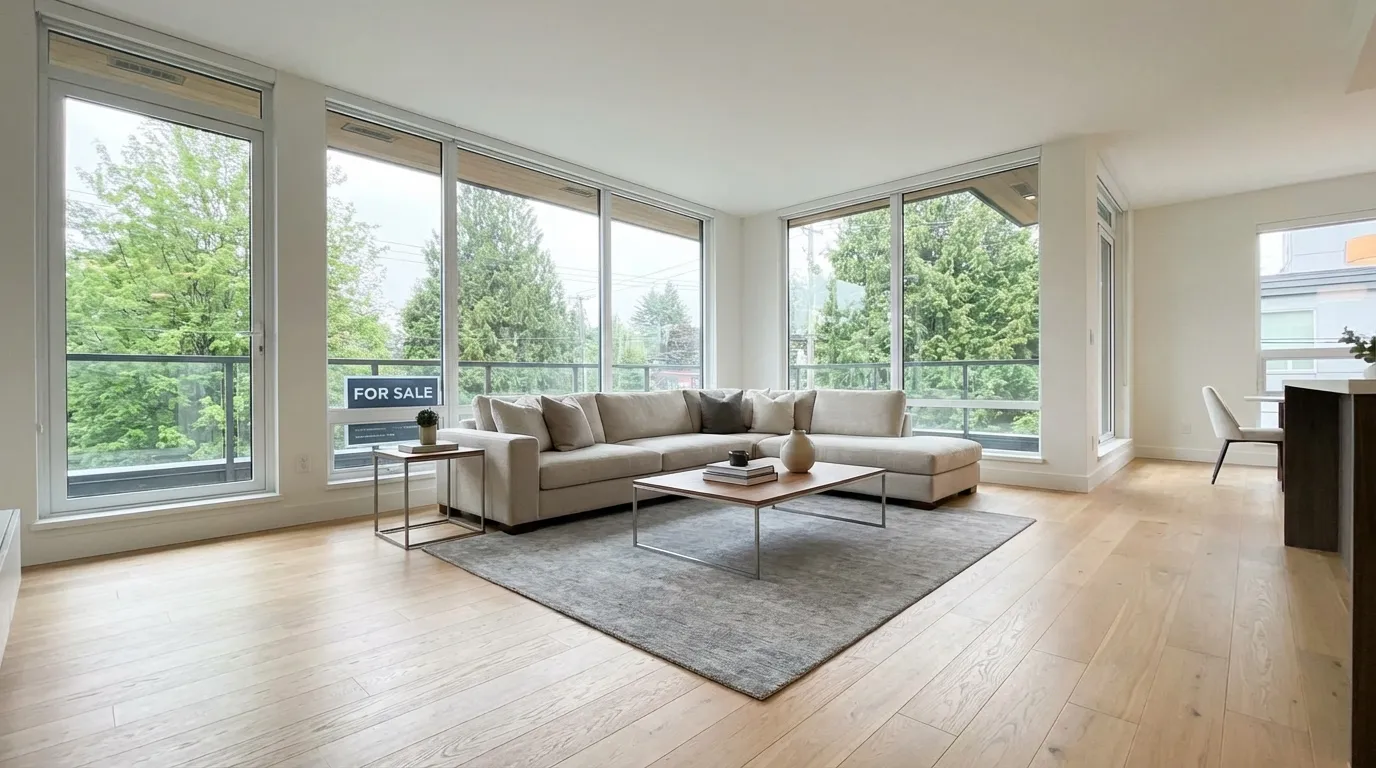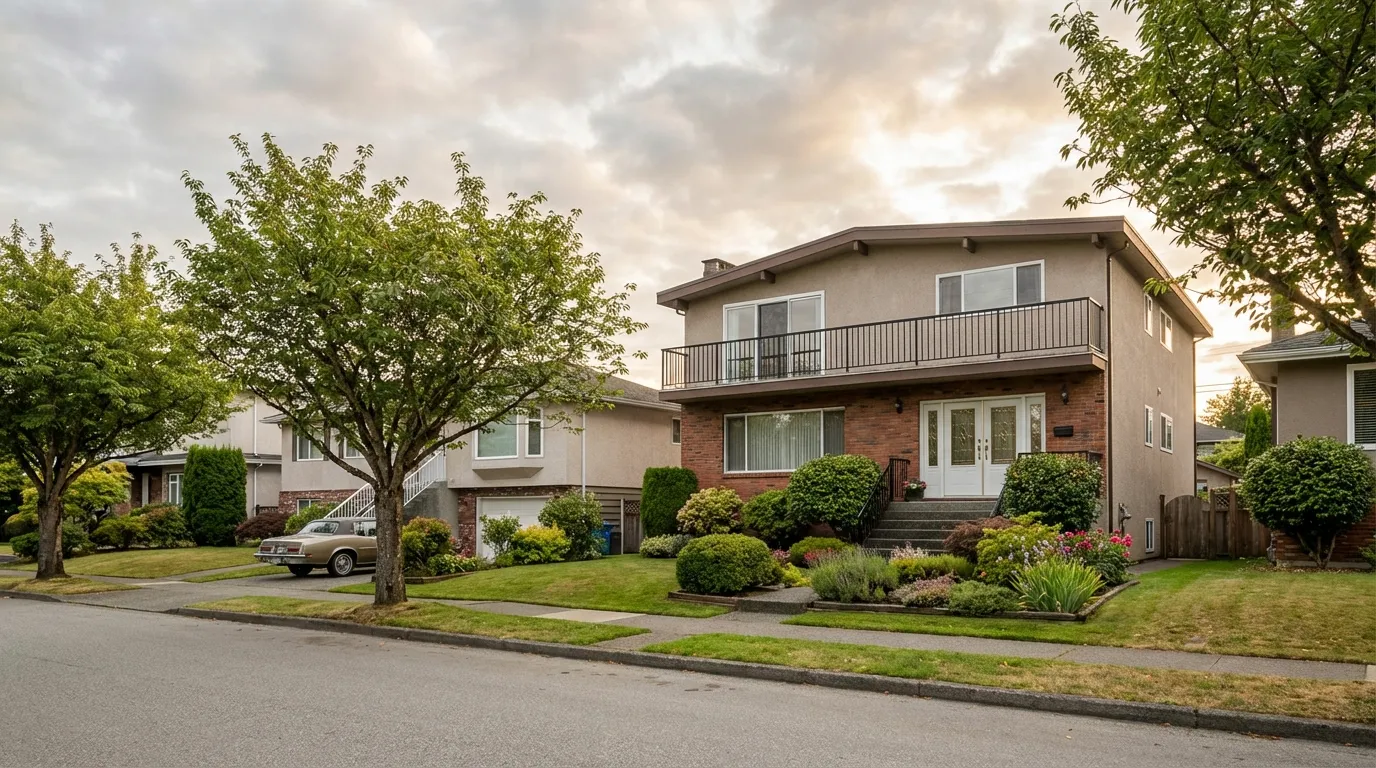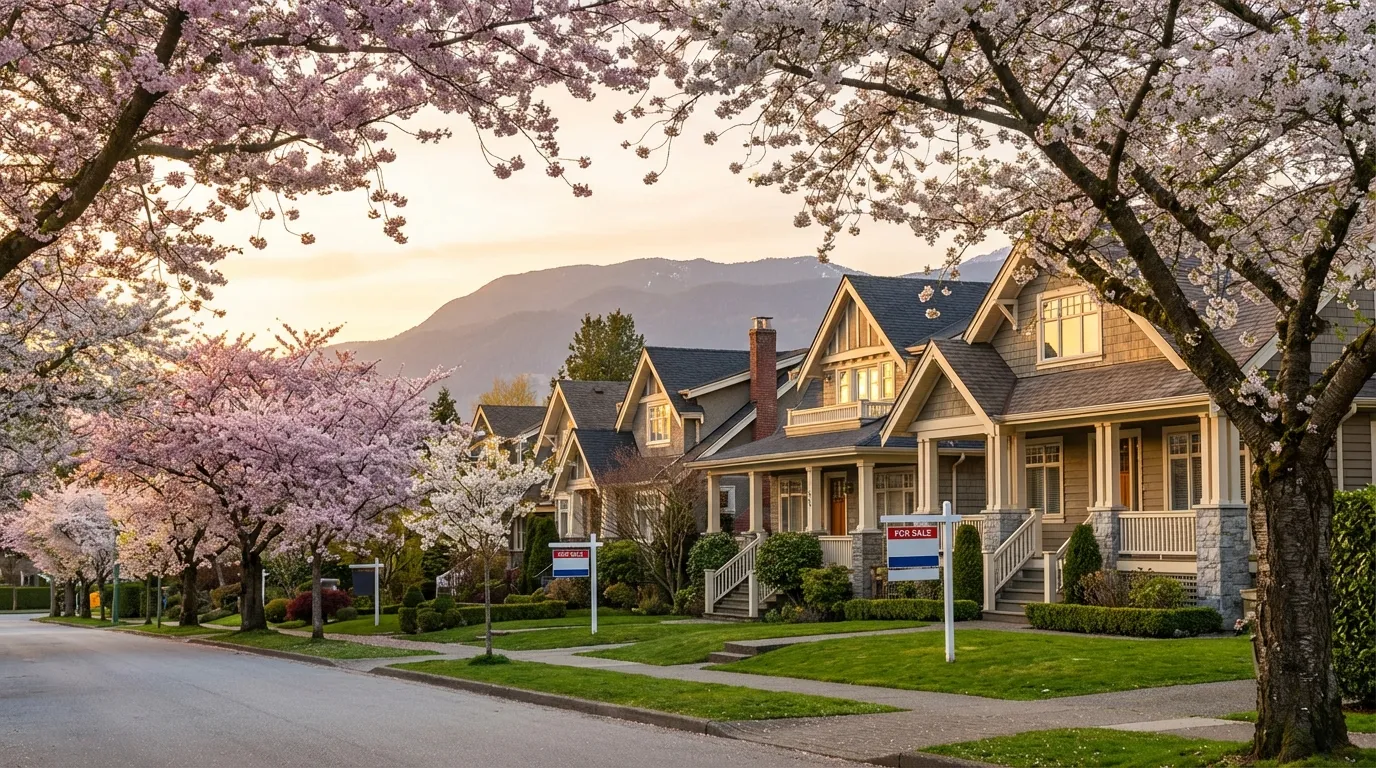
The Bank of Canada slashed rates 275 basis points, but Vancouver homes are no more affordable. Here is why lower rates alone will not fix the math, and what actually matters if you are trying to buy.
Every time the Bank of Canada cuts rates, I get the same phone call. Someone who has been renting in Mount Pleasant or Kitsilano sees the headline, does some quick mental math, and asks me whether they can finally afford to buy.
I wish the answer were simple. But after 20 years of selling real estate in this city, I have learned that the relationship between mortgage rates and actual affordability is one of the most misunderstood things in Canadian housing. And in Vancouver, where the numbers are more extreme than anywhere else in North America, that misunderstanding costs people real money and real time.
Let me walk you through what is actually happening.
The Rate Cut Story Everyone Heard
The Bank of Canada went on an aggressive cutting cycle through 2025, dropping the overnight policy rate by 275 basis points to land at 2.25% by January 2026. That is a significant move. Seven consecutive cuts. The kind of easing cycle that in previous decades would have set off a buying frenzy.
And yet Metro Vancouver’s housing market barely flinched. Sales stayed sluggish. Prices continued drifting lower. The average residential sale price in October 2025 sat at $1,763,534 according to GVR data, a modest 1.2% yearly increase that did not even keep up with inflation.
So what went wrong with the playbook?
Why Lower Rates Are Not Fixing Affordability
Here is the part nobody in banking or government wants to say out loud: when a home costs 13.5 times the typical household income, a one or two percent rate reduction does not move the needle enough to matter.
Vancouver’s price-to-income ratio of 13.5 is the worst in North America. Not the worst in Canada. The worst on the continent. The typical Vancouver household earns about $86,388 per year. To qualify for an average-priced home, you would need a household income somewhere around $250,805. That is nearly three times what most families actually earn.
Let me put that in concrete terms. Say you are a dual-income couple making a combined $120,000, which is above average. Under current stress-test rules, you qualify for roughly $550,000 to $600,000 in mortgage. But the GVR benchmark price for a condo in Metro Vancouver is $1,001,687. For a townhouse, it is $1,486,297. A detached home? $2,670,235.
The rate cuts helped at the margins. They shaved a couple hundred dollars off monthly payments. But the fundamental gap between what people earn and what homes cost has not closed. Not even close.
The Fixed Rate Trap
Here is something that surprised a lot of my clients this past year: fixed mortgage rates barely moved despite the Bank of Canada’s aggressive cutting.
Right now, the major banks are offering 5-year fixed rates in the 4.5% to 4.7% range. Mortgage brokers can get you 4.2% to 4.4% if you shop around. Those are decent rates historically, but they are not dramatically different from where they were before the BoC started cutting.
Why? Because fixed rates are tied to the bond market, not the overnight rate. The bond market prices in future expectations, and right now, bond traders see inflation risks from U.S. tariff threats and global supply chain disruption keeping longer-term yields elevated.
The more telling number is the spread between fixed and variable rates. Historically, variable rates have been 0.90% to 1.25% below fixed rates, which is the whole reason people took on the risk of a variable mortgage. Today, that spread has compressed to just 0.25% to 0.40%. In practical terms, the reward for choosing variable over fixed has almost disappeared. That changes the calculus for a lot of buyers.
The Down Payment Wall
Even if rates dropped to zero, Vancouver would still have an affordability crisis. Here is why: the down payment.
On an average Metro Vancouver home at $1,763,534, a 20% down payment is approximately $353,000. Even at 5% down on a property under $500,000 (if you can find one), you are looking at $25,000 minimum plus mortgage insurance premiums that add thousands to your total cost.
At a savings rate of $2,000 per month, which is aggressive for most renters paying Vancouver rents, it would take over 15 years to accumulate that 20% down payment. Fifteen years. That is not a minor obstacle. That is a generational barrier.
This is why I tell clients that the rate discussion, while important, is a distraction from the real issue. The entry cost, not the carrying cost, is what locks most people out.
Where the Money Actually Goes: A Neighbourhood Reality Check
The averages tell one story. The neighbourhood data tells a more honest one.
East Vancouver detached homes sit around $2.37 million. West Vancouver detached? $4.46 million. The sales-to-active ratio in East Vancouver was 14.9% as of recent GVR data, compared to the metro-wide average of 11.3%, which tells me demand in more affordable east-side pockets is holding up better than on the west side.
Meanwhile, benchmark prices have fallen across the board. Detached homes are down 4.3% year-over-year. Townhouses dropped 3.8%. Condos fell 5.1%. Those declines are real, and they help. But a 5% drop on a $2.67 million detached home still leaves you at $2.53 million. The math does not transform.
Where I am seeing actual movement is in the new construction condo market. There are an estimated 2,500 to 3,215 unsold newly built condo units sitting across Metro Vancouver. Developers with carrying costs are motivated. If you are a condo buyer, that is where your negotiating leverage lives right now.
What Buyers Are Actually Doing
I track buyer behaviour closely, and the data lines up with what I am hearing in conversations. According to CMHC research, about 60% of active buyers in Metro Vancouver are now considering more affordable areas than they originally targeted. Forty percent have reduced their property size expectations.
People are adapting. They are looking at Collingwood instead of Fairview. They are considering two-bedrooms instead of three. They are exploring Marpole and Renfrew and finding that these neighbourhoods offer solid livability at lower price points.
I think that is smart, not a compromise. Some of the best value in Vancouver right now is in neighbourhoods that do not have the prestige branding but have everything you actually need: transit access, walkable amenities, good schools, and housing stock that works for real families.
So What Actually Improves Affordability?
If rate cuts alone will not do it, what will? I think there are three things that matter far more than where the Bank of Canada sets its overnight rate:
Income growth that outpaces home prices. Vancouver needs either wages to rise significantly or prices to continue softening. The current price declines of 4-5% are a start, but the gap remains enormous at 13.5 times income.
Supply in the right segments. The condo glut helps condo buyers. But we need more missing-middle housing: duplexes, triplexes, townhouses in walkable neighbourhoods. The City of Vancouver’s multiplex zoning changes are a step in the right direction, but the units take years to materialize.
Creative financing and policy. Extended amortizations, shared-equity programs, and policy changes that reduce the down payment barrier matter more than rate cuts for most first-time buyers. The federal government’s 30-year insured amortization for first-time buyers on new builds is one of the few policy moves that directly addresses the problem.
What I Tell Clients Who Ask About Timing
I do not pretend to know where rates go next. The Bank of Canada held at 2.25% in January, and my best guess is they hold through the spring unless something dramatic happens with tariffs or employment.
But I do tell people this: do not wait for rates to solve your affordability problem. They will not. What will help is finding the right property at the right price in a market that currently favours buyers, negotiating well, and structuring your financing in a way that works for your actual income and lifestyle.
That is less exciting than a headline about rate cuts. It is also more honest.
Key Takeaways
- The Bank of Canada cut rates 275 basis points to 2.25%, but Vancouver’s price-to-income ratio remains 13.5x, the worst in North America
- Fixed rates at major lenders sit around 4.5-4.7%, barely moving despite BoC cuts, because bond markets are pricing in inflation risk
- A 20% down payment on an average Vancouver home requires approximately $353,000, or 15+ years of aggressive saving
- Benchmark prices are falling (detached down 4.3%, condos down 5.1%), which helps more than rate cuts on a dollar-for-dollar basis
- The best value right now is in unsold new construction condos and east-side neighbourhoods where demand-to-supply ratios remain healthier
Frequently Asked Questions
Are mortgage rates going down further in 2026?
The Bank of Canada held its policy rate at 2.25% in January 2026 after seven consecutive cuts. Most economists expect the rate to hold through the first half of 2026 unless a significant economic shock occurs. Fixed rates, which are bond-market driven, may stay in the 4.2-4.7% range regardless of what the BoC does with the overnight rate.
Can the average person afford a home in Vancouver?
Not without significant help or compromise. The typical household income of $86,388 qualifies for roughly $400,000-$450,000 in mortgage, which falls well short of benchmark prices across all property types. Most buyers either have family assistance for the down payment, a dual high-income household, or they are purchasing well below the benchmark in more affordable sub-markets.
Should I choose a fixed or variable mortgage in Vancouver right now?
The historical incentive for variable, a spread of 0.90-1.25% below fixed, has compressed to just 0.25-0.40%. That means you are taking on interest rate risk for very little reward. I am seeing most of my clients opt for fixed right now, locking in certainty. That said, if you believe the BoC will cut further, variable still has upside. Talk to a mortgage broker about your specific situation.
Is it better to wait for prices to drop more?
Prices are already down 4-5% across all property types. Further declines are possible but not guaranteed. The risk of waiting is that you compete with more buyers as the market shifts back toward balance through 2026. If you find a property that works for your budget today, the carrying cost will not improve dramatically from here.
Sources
- Greater Vancouver Realtors - Monthly Statistics and Benchmark Data
- Bank of Canada - Policy Rate Decisions and Monetary Policy Reports
- Canada Mortgage and Housing Corporation - Housing Market Reports
Data sourced February 2026. Mortgage rates, benchmark prices, and market conditions change frequently. Consult a licensed mortgage broker and your Realtor before making financial decisions.
Ready to Run the Numbers?
Affordability is personal. The averages tell you what the market looks like. A conversation tells you what your specific options are. I work with buyers every day who thought they were priced out, only to find realistic paths forward once we looked at the right neighbourhoods and the right financing structures.
If you want an honest assessment of what your budget can do in today’s Vancouver market, I am happy to walk you through it. No pressure, no sales pitch, just the math.
Call Greyden Douglas directly at (604) 218-2289 or book a call to discuss your situation.