Steel tariffs at 50%, softwood lumber duties near 45%, and a CMHC recession warning. Here's how the US-Canada trade war is hitting Vancouver construction costs, mortgage rate decisions, and buyer confidence heading into spring 2026.
I have been watching trade disputes affect Vancouver real estate for two decades, and I have never seen anything quite like this. The US-Canada tariff situation in 2026 is not just a headline for the business section. It is changing what it costs to build a home, what the Bank of Canada can do with interest rates, and how confident people feel about making the biggest purchase of their lives.
Let me walk you through what is actually happening, what the numbers say, and what I think it means if you are buying, selling, or building in Vancouver right now.
The Tariff Situation Right Now
The trade relationship between Canada and the US has been chaotic over the past year, and it helps to understand where things actually stand as of March 2026.
On February 20, 2026, the US Supreme Court struck down tariffs imposed under the International Emergency Economic Powers Act (IEEPA), ruling 6-3 that IEEPA does not grant the president authority to impose tariffs. That eliminated the 35% “fentanyl” tariffs that had been levied on Canadian goods. But the relief was short-lived. The administration immediately pivoted to Section 122 of the Trade Act of 1974, imposing a temporary 10% global import surcharge starting February 24, 2026. The surcharge does not apply to goods already subject to Section 232 tariffs on steel, aluminum, and copper, and exempts certain categories including energy products and pharmaceuticals.
Here is what still hits Canadian exports hard:
- Steel and aluminum: 50% tariffs under Section 232, doubled from 25% in June 2025. No CUSMA exemption.
- Softwood lumber: Approximately 45% combined duty rate (35.16% anti-dumping/countervailing duties plus 10% Section 232 tariff). Also no CUSMA exemption.
- Automobiles and light trucks: 25% under Section 232, with partial exemption for US content in CUSMA-compliant vehicles.
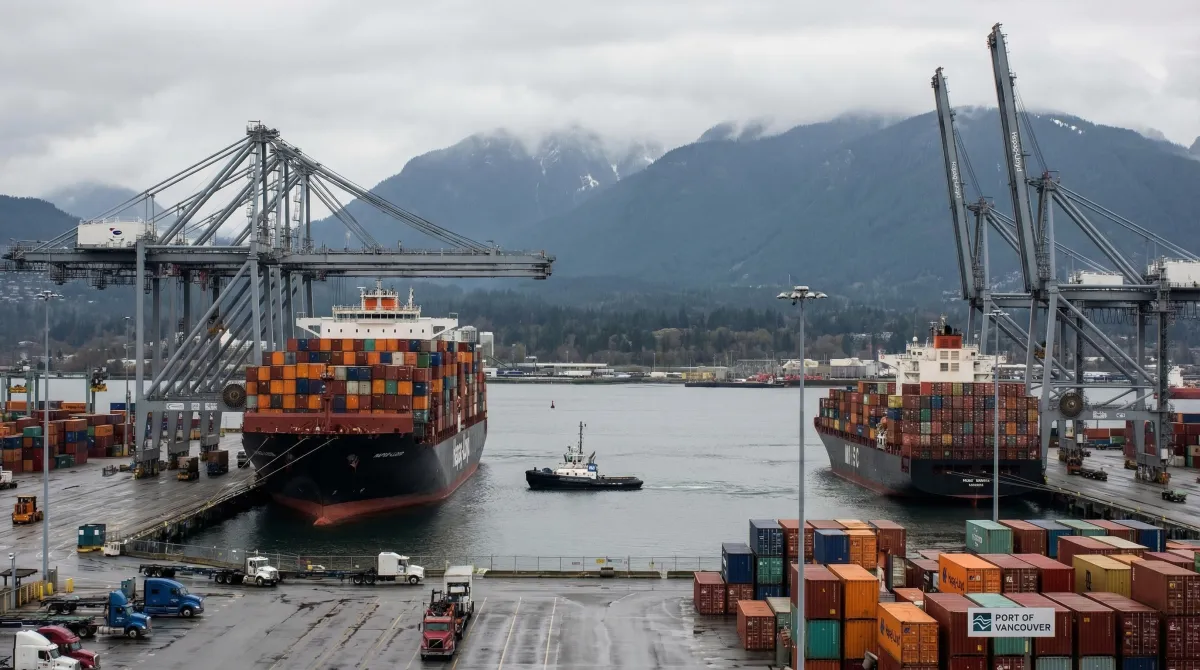
Canada’s response has been measured. Ottawa removed counter-tariffs on most US imports effective September 1, 2025, but retaliatory tariffs on steel, aluminum, and autos remain in place while negotiations continue.
This is the trade environment we are building homes in. And the numbers tell a story.
What Tariffs Are Doing to Construction Costs
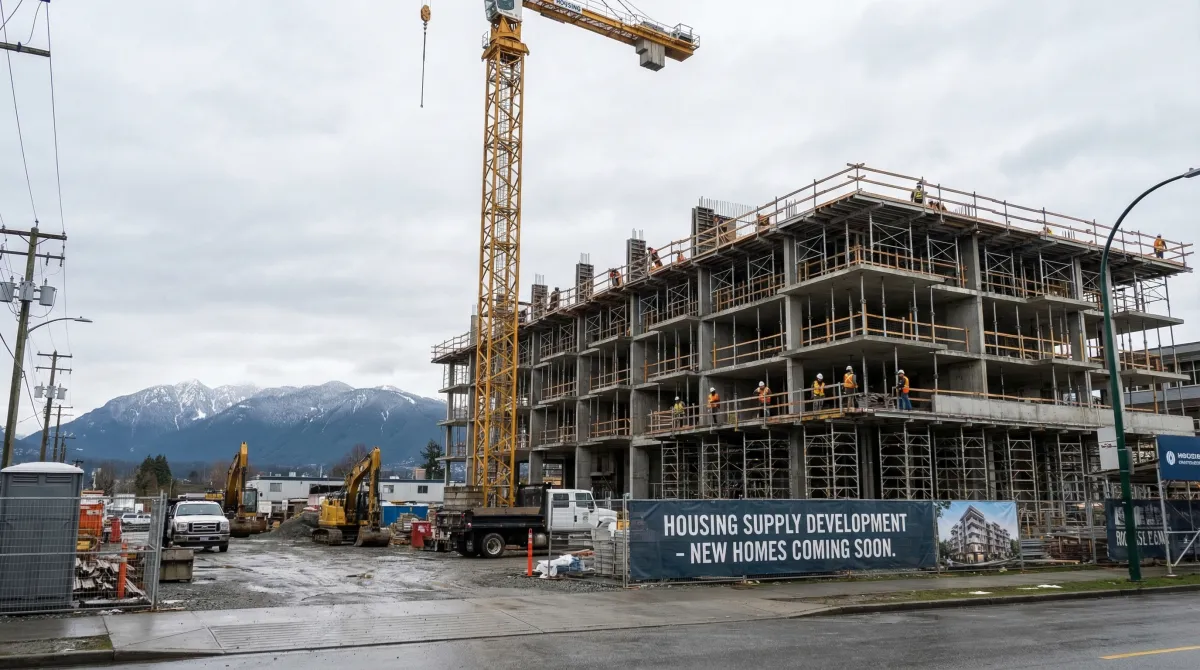
If you are building anything in Vancouver right now, you are feeling this. The materials that go into homes — steel framing, aluminum windows, softwood lumber for everything from studs to roof trusses — are all subject to duties that did not exist three years ago.
The National Association of Home Builders (NAHB) estimates that current tariff actions add roughly $10,900 to the cost of a typical new home in the US. In Canada, where we import significant building materials from both directions, the math gets worse. About $14 billion of the goods used annually in new residential construction originate from foreign nations.
According to Associated Builders and Contractors’ analysis of January 2026 PPI data, construction input prices jumped 0.7% in a single month, driven by tariff-affected materials. The year-over-year numbers on specific materials are jarring:
| Material | Year-over-Year Price Change |
|---|---|
| Aluminum mill shapes | +33.0% |
| Steel mill products | +20.7% |
| Copper and brass mill shapes | +15.7% |
| Nonresidential construction inputs (overall) | +2.9% |
Source: Construction Dive - Tariffs drove construction input prices up to start 2026, Feb 2026
In Vancouver specifically, those numbers land on top of already elevated costs. BC’s industrial carbon tax hit $110 per tonne in 2026, up 37.5% from $80 the prior year, which directly increases operating costs at sawmills and treatment facilities. Western Red Cedar, a staple of West Coast construction, is already squeezed by BC harvest reductions and beetle damage.
I have spoken with builders who are adding 10-15% contingency budgets to projects that were quoted six months ago. That was unheard of even during the COVID lumber spike. The difference now is that these costs are structural — they are baked into trade policy, not a temporary supply shock.
How Tariffs Are Handcuffing the Bank of Canada
This is the part that affects every buyer with a mortgage, and it is frustrating.
The Bank of Canada held its overnight rate at 2.25% on January 28, 2026, the second consecutive hold after seven straight cuts brought the rate down from 5.0% starting in mid-2024. Governor Tiff Macklem was unusually direct about why: tariff uncertainty has made it nearly impossible to forecast the economy.
His exact framing: the range of possible outcomes is wider than usual, US trade policy remains unpredictable, and geopolitical risks are elevated.
Here is the bind the Bank is in. If tariffs escalate further and Canada’s export economy takes another hit, they may need to cut rates aggressively to prevent a deeper downturn. But if tariffs ease and economic activity picks up, cutting now could reignite inflation. So they wait. And every month they wait, mortgage holders and buyers sit in limbo.
The next rate announcement is March 18, 2026. My read: another hold is the most likely outcome. The Bank has signaled that it needs clarity on trade policy before moving in either direction, and that clarity does not appear to be coming anytime soon.
For variable-rate mortgage holders, this means your rate is probably staying where it is for a while. For buyers shopping with pre-approvals, the good news is that rates are not going up. The bad news is that the rate cuts many were banking on for spring may not materialize.
Recession Risk: What CMHC Is Warning About
The Canada Mortgage and Housing Corporation released its 2026 Housing Market Outlook in February, and the language is worth paying attention to.
CMHC projects Canadian GDP growth of just 0.7% for 2026. To put that in context, that would make 2026 one of the weakest growth years in recent decades outside of an actual recession. They are not calling a recession in their base case, but the report states explicitly that downside risks are more likely than upside risks.
If business sentiment worsens and government projects get delayed, CMHC says Canada could slip into a mild recession due to a sharp drop in investment. Trade remains a “major headwind,” with US tariffs continuing to raise costs for Canadian exporters and creating ongoing uncertainty.
For housing specifically:
- National housing starts are forecast at 247,000 for 2026, down from 259,000 in 2025
- Sales are expected to stay below historical averages
- Prices may show “modest gains” nationally after falling in 2025, but the story varies dramatically by region
That national picture masks what is happening in Vancouver and Toronto, which are getting hit harder than most markets.
Vancouver-Specific Impacts
Vancouver is exposed to tariff disruption in ways that smaller Canadian markets are not.
The Construction Pipeline Is Stalling
CMHC expects more condominium projects to be postponed or cancelled in 2026, with those effects extending into 2027 and 2028. A significant decline in presales has stalled many planned projects. Developers are looking at higher material costs, weaker demand, and rising inventories of unsold units — and deciding it does not pencil out.
Rental construction is also expected to slow in the second half of 2026 as vacancy rates reach multi-decade highs and rent growth decelerates.
I think this creates a problem that will not be obvious for another two or three years. If we build fewer homes now because of tariff-inflated costs, we will have a supply shortage when demand eventually rebounds. We have seen this cycle before in Vancouver. The pipeline does not turn on and off like a tap.
Buyer Confidence Is Down
Greater Vancouver Realtors reported just 1,107 residential sales in January 2026, a 28.7% decrease from January 2025 and 30.9% below the 10-year seasonal average. The MLS Home Price Index composite benchmark is at $1,101,900, down 5.7% year-over-year.
| Property Type | Benchmark (Jan 2026) | Year-over-Year |
|---|---|---|
| Composite | $1,101,900 | -5.7% |
| Detached | $1,850,800 | -7.3% |
| Condo | $704,600 | -5.9% |
Source: Greater Vancouver Realtors, January 2026 Statistics
Royal LePage CEO Phil Soper put a number on the tariff drag. He told CTV that trade uncertainty dragged home prices between two and four percent in 2025, calling it the single biggest factor holding back housing activity. Royal LePage projects the Vancouver aggregate home price will decrease 3.5% to $1,147,868 year-over-year by Q4 2026.
That is a sobering forecast for a market that many expected would bounce back once rates came down.
What This Means for Buyers and Sellers Right Now
For Buyers
In my experience, the best time to buy in Vancouver is when fear is high and competition is low. That describes right now. Sales are 30% below the 10-year average. Inventory is building. Sellers are negotiating.
Yes, there is economic uncertainty. Yes, tariffs could get worse. But prices are already reflecting a lot of that bad news. If you have stable employment and a mortgage pre-approval, the spring 2026 market is offering something Vancouver does not often offer: time and leverage.
The tariff situation also has a silver lining for buyers of existing homes. New construction is getting more expensive because of material costs, which makes resale inventory relatively more attractive on a cost-per-square-foot basis.
For Sellers
I will be honest. This is not an easy market to sell in. Buyer demand is weak, and the tariff uncertainty gives people another reason to wait.
If you need to sell, price aggressively from day one. Do not test the market with an aspirational number. The data is clear: properties priced right are moving; overpriced listings are sitting. With the sales-to-active ratio at 9.1% in January, we are firmly in buyer’s market territory.
If you have the flexibility to wait, the USMCA review in July could bring clarity that unlocks pent-up demand. But “could” is doing a lot of work in that sentence.
For Builders and Developers
Budget conservatively. The 50% steel tariff and 45% softwood lumber duties are not going away soon. If you are pricing a multiplex project or any new build, factor in the possibility that these costs are the new baseline, not a temporary spike.
The USMCA Review: What Is Ahead
The formal review of the United States-Mexico-Canada Agreement begins July 1, 2026. All three countries must decide whether to extend the agreement for another 16-year term. If they do not agree to extend it, the agreement terminates in 2036.
What was supposed to be a routine review is now likely to become a high-stakes negotiation. The Trump administration is expected to seek concessions on trade disputes while leveraging the review to address non-trade issues like migration and continental defence.
For housing, the USMCA review matters because it is the most likely path to resolving the Section 232 tariffs on steel, aluminum, and lumber. If Canada negotiates exemptions for these materials, construction costs come down materially. If the review stalls or collapses, we are looking at these elevated costs for years.
Phil Soper said it well: if a renewed trade deal comes to fruition, it could provide a jolt to the economy that ripples through to the housing market. I agree. But I am not building my strategy around that outcome. Hope is not a business plan.
Key Takeaways
- Steel and aluminum face 50% US tariffs; softwood lumber faces ~45% combined duties. These are raising construction costs across Vancouver and are unlikely to be resolved before the USMCA review in July 2026.
- The Bank of Canada is stuck. Tariff uncertainty is preventing rate cuts that the economy arguably needs. The March 18 announcement will likely be another hold at 2.25%.
- CMHC forecasts 0.7% GDP growth with recession as a realistic downside scenario. Housing starts are slowing and presale activity in Vancouver is weak.
- Vancouver prices are down 5.7% year-over-year with sales 30% below the 10-year average. For prepared buyers, that combination creates opportunity. For sellers, it demands realistic pricing.
- The USMCA review starting July 1, 2026 is the biggest wildcard. A deal that exempts construction materials from tariffs would change the outlook meaningfully.
Frequently Asked Questions
How are US tariffs affecting Vancouver home prices in 2026?
US tariffs are affecting Vancouver home prices through two channels: directly, by increasing new construction costs (50% tariffs on steel/aluminum and ~45% on softwood lumber add thousands to every new build), and indirectly, by creating economic uncertainty that suppresses buyer confidence. Royal LePage CEO Phil Soper estimates tariff-related trade uncertainty dragged Canadian home prices down 2-4% in 2025, and Royal LePage projects Vancouver’s aggregate price will decline 3.5% year-over-year by Q4 2026.
Will the Bank of Canada cut rates in 2026 despite tariffs?
The Bank of Canada held its overnight rate at 2.25% in January 2026 and cited tariff uncertainty as a primary reason. Governor Macklem has signaled the Bank needs more clarity on trade policy before moving rates in either direction. The next announcement is March 18, 2026. My expectation is another hold. If the USMCA review in July brings trade clarity, rate cuts later in 2026 become more likely, but there are no guarantees.
How much do tariffs add to the cost of building a new home in Vancouver?
The NAHB estimates current tariffs add approximately $10,900 to the cost of a typical new home in the US. In Vancouver, the impact is compounded: 50% tariffs on steel and aluminum, ~45% combined duties on softwood lumber, and BC’s $110/tonne carbon tax on industrial operations all push costs higher. Builders I work with are adding 10-15% contingency to project budgets quoted six months ago. Aggregate construction costs are estimated to rise roughly 8% under current tariff conditions.
What happens to Vancouver housing if there is a recession in 2026?
CMHC’s baseline forecast is 0.7% GDP growth, but they acknowledge recession is a realistic downside scenario if business investment drops sharply. In a mild recession, expect further price declines (particularly in condos, which are already soft), delayed construction projects, and continued low sales volumes. However, recessions also tend to trigger Bank of Canada rate cuts, which eventually support a recovery. In Vancouver’s history, post-recession rebounds have been strong because of the city’s structural housing demand.
When will tariff impacts on Vancouver real estate ease?
The most likely inflection point is the USMCA formal review starting July 1, 2026. If Canada negotiates exemptions for construction materials (steel, aluminum, lumber), costs would come down meaningfully. If the review stalls, current tariff levels could persist for years. The Supreme Court’s February 2026 ruling striking down IEEPA tariffs removed one layer of duties, but the Section 232 tariffs that hit construction materials hardest remain in place through separate legal authority.
Sources
- Fasken - US Supreme Court Rejects IEEPA Tariffs: Key Takeaways for Canadian Businesses, Feb 2026
- CMHC - Housing Market Outlook 2026, Feb 2026
- Bank of Canada - Rate Decision January 28, 2026
- NAHB - How Tariffs Impact the Home Building Industry, 2026
- Construction Dive - Tariffs Drove Construction Input Prices Up to Start 2026, Feb 2026
- Greater Vancouver Realtors - Monthly Market Report, Jan 2026
- Royal LePage - Canada’s Housing Market Poised for a Reset in 2026, Dec 2025
- CTV News - Tariffs, Immigration Shifts, Condo Softness Shape Canada’s Housing Outlook, Dec 2025
- CSIS - USMCA Review 2026
- Canada.ca - Canada’s Response to U.S. Tariffs
- Global News - Housing Market Faces Possible Recession in 2026 Amid Subdued Demand: CMHC, Feb 2026
Data sourced March 3, 2026. Market conditions change frequently. Verify current figures before making financial decisions.
Next Steps: Work with Rain City Properties
Trade wars do not pause the housing market. People still need homes. Investors still find opportunity in uncertainty. The question is whether you are making decisions based on headlines or on data.
At Rain City Properties, I track these macro forces because they directly affect what my clients should do. Whether you are weighing a purchase in a soft market, considering selling before conditions shift further, or scoping a multiplex build with these new cost realities, the strategy needs to account for where tariffs and rates are actually going — not where we wish they were.
Contact Greyden Douglas directly at (604) 218-2289 or book a call to discuss your Vancouver real estate goals.
Related Vancouver real estate pages
Continue with local service pages, neighbourhood guides, and actionable resources related to this topic.