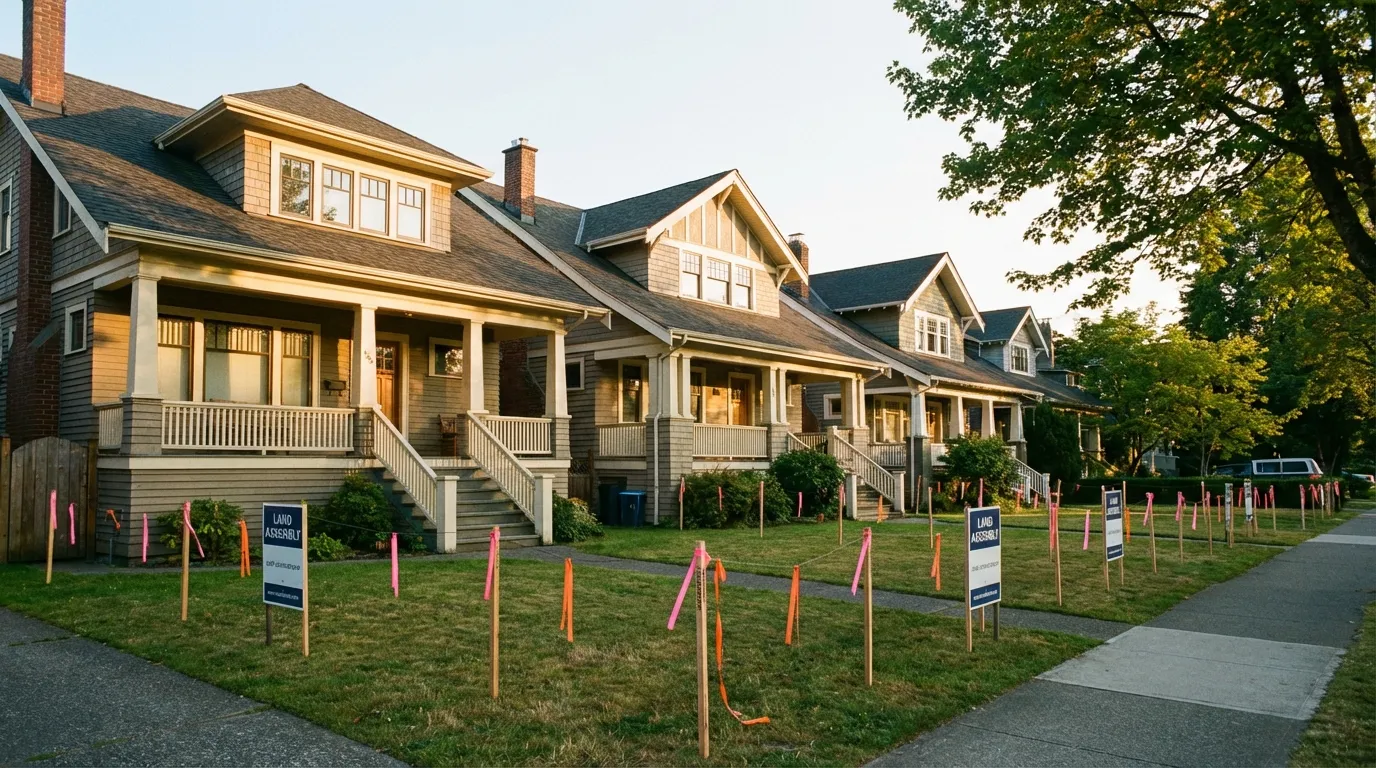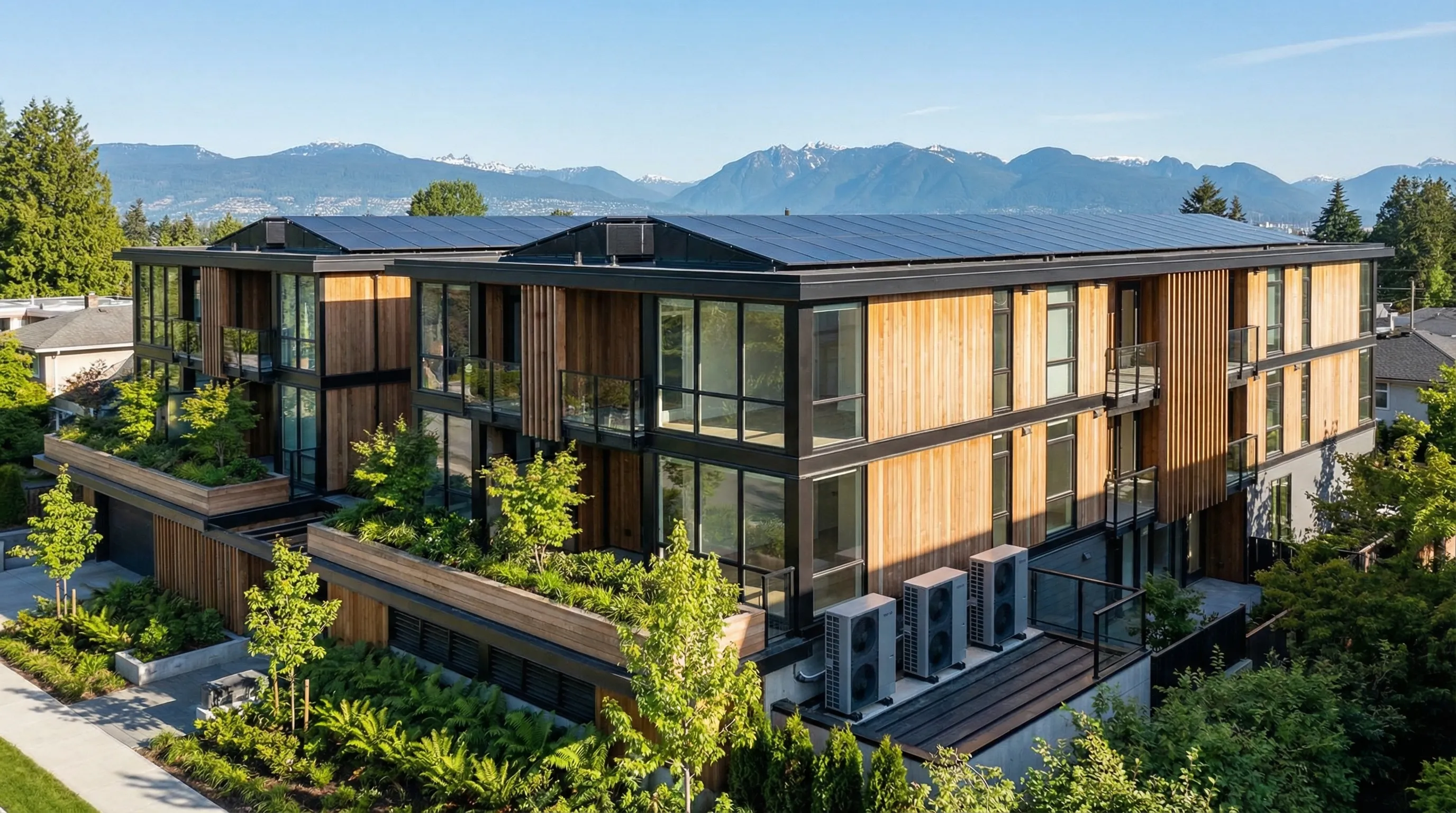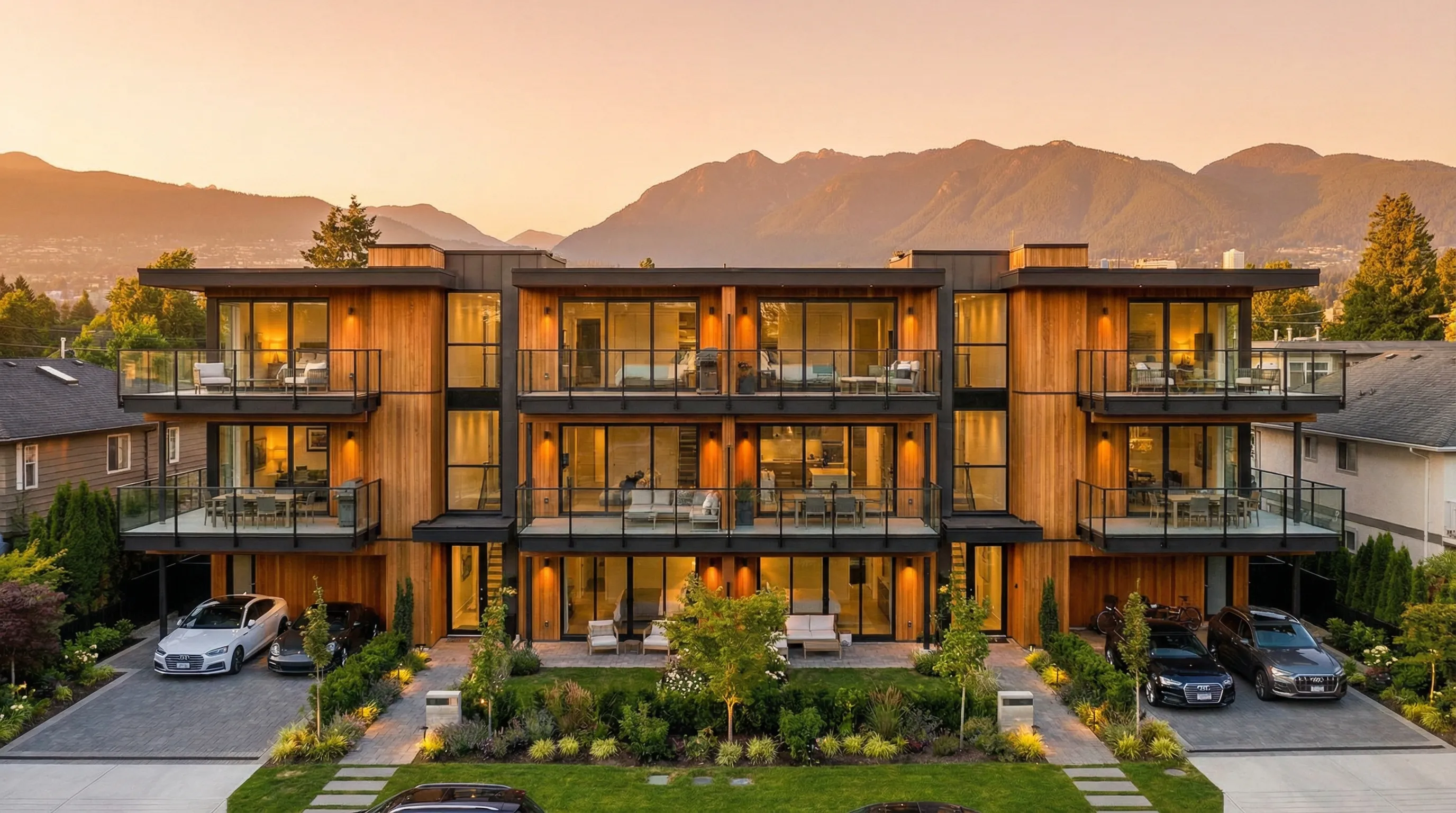
Converting your Vancouver single-family home into a multiplex under Bill 44 is complex. Here's why hiring a specialized realtor saves you money, protects your interests, and unlocks maximum value from your property.
Vancouver’s multiplex zoning under Bill 44 has opened unprecedented opportunities for homeowners to unlock hidden value in their properties. What used to require rezoning applications, public hearings, and years of uncertainty can now happen by-right on most single-family lots across the city.
But here’s what most homeowners don’t realize: multiplex conversion is not a DIY project. The financial, legal, and strategic complexity of converting your home into a 3-6 unit building requires specialized expertise that goes far beyond typical real estate transactions.
After guiding dozens of Vancouver homeowners through multiplex conversions, I’ve seen firsthand how the right realtor makes the difference between a profitable transformation and a costly mistake.
The Multiplex Conversion Landscape in Vancouver
Before diving into why you need a realtor, let’s establish what we’re dealing with. Bill 44 (the Housing Statutes (Residential Development) Amendment Act, 2023) requires municipalities to allow Small-Scale Multi-Unit Housing (SSMUH) on properties currently zoned for single-family homes.
In Vancouver, this means:
- 3-6 units permitted depending on lot size and location
- No rezoning required for eligible properties
- New construction or conversion of existing homes
- Strata or rental tenure options available
Sounds straightforward, right? It’s not. Here’s why.
The Hidden Complexity Most Homeowners Miss
1. Property Valuation Is Completely Different
Your home is no longer just a home—it’s a development site. Traditional comparative market analysis (CMA) doesn’t work here. You need residual land value analysis, which requires:
- Understanding developer profit margins (typically 15-20% on multiplex projects)
- Calculating hard costs (construction at $350-$450/sq ft in Vancouver)
- Factoring soft costs (permits, engineering, legal fees—often $150K+)
- Assessing site-specific constraints (trees, slopes, easements, services)
- Comparing to both residential comps AND developer acquisition prices
Real Example: A Kitsilano homeowner thought their 50’ lot was worth $2.1M based on neighbourhood sales. After residual land value analysis, the development site value was actually $2.8M—a $700,000 difference. Without that analysis, they would have left that money on the table.
A specialized realtor performs this analysis or coordinates with appraisers who understand land economics, not just residential values.
2. Developer Vetting Is Mission-Critical
Bill 44 has created a gold rush. Dozens of new “developers” have entered the multiplex space, many with limited track records. Partnering with the wrong developer can result in:
- Cost overruns that eat into your equity
- Timeline delays (18 months becomes 30 months)
- Quality issues that affect resale or rental income
- Partnership disputes that end up in litigation
- Project abandonment mid-construction
What a Specialized Realtor Provides:
- Access to vetted developer networks with proven multiplex experience
- Reference checks on completed projects (visit actual builds)
- Financial due diligence (are they properly capitalized?)
- Track record analysis (permits pulled, projects completed, on-time delivery rate)
- Red flag identification (inexperienced teams, undercapitalized ventures)
I maintain relationships with 15+ multiplex developers in Vancouver who have completed at least 3 projects each. I’ve seen their work firsthand, talked to their previous partners, and know their strengths and weaknesses. That knowledge protects my clients from costly mistakes.
3. Partnership Structure Requires Legal and Financial Expertise
Most multiplex conversions involve partnership structures between the landowner (you) and the developer. These partnerships come in several forms:
Limited Partnership (LP)
- You contribute land, they contribute construction capital and expertise
- You’re a passive investor
- Profit split typically 50/50 or 60/40 depending on land value
- Lower risk but less control
General Partnership (GP)
- Active involvement in decisions
- Shared liability
- More control over design and process
- Higher risk if things go wrong
Land Lease + Development Agreement
- You retain land ownership, lease to developer for construction
- Developer builds and sells/rents units
- You receive lease payments + profit participation
Joint Venture (JV)
- Formal corporate structure (Ltd. Partnership or Co.)
- Defined capital contributions, profit waterfalls, exit mechanisms
- Most complex but most flexible
What Most Homeowners Get Wrong: They sign the first partnership agreement a developer presents without:
- Independent legal review by a real estate lawyer
- Financial modeling of different profit split scenarios
- Exit clause protections (what if you need to sell your interest?)
- Cost overrun provisions (who pays if construction exceeds budget?)
- Timeline penalties (what happens if they miss deadlines?)
A realtor experienced in multiplex conversions brings in the right legal and financial advisors to structure the deal properly. I’ve negotiated dozens of these partnerships and know exactly what clauses protect homeowners versus what favors developers.
4. Navigating Regulatory Complexity
Yes, Bill 44 allows multiplex by-right. But that doesn’t mean it’s simple. You still need to navigate:
City of Vancouver Requirements:
- Development permit application
- Building permit compliance
- Parking and loading requirements (varies by neighbourhood)
- Tree retention bylaws
- Heritage considerations (in certain areas)
- Neighbourhood notification (not approval, but notification)
- Utility servicing upgrades
Strata Registration (If Subdividing):
- Strata plan preparation
- Form B, Form F, engineering reports
- Depreciation reports
- Strata bylaws and rules
- Insurance requirements
Provincial Building Code:
- Fire separation requirements (Type 3 vs Type 5 construction)
- Energy efficiency standards (BC Energy Step Code)
- Accessibility requirements (adaptable units)
- Seismic requirements
What a Realtor Does: While you’ll need engineers, architects, and lawyers to complete these requirements, a specialized realtor coordinates the process:
- Connects you with consultants who specialize in multiplex projects
- Keeps timeline on track (delays cost money)
- Identifies potential regulatory roadblocks early
- Ensures your partnership agreement allocates responsibility correctly
5. Market Timing and Pricing Strategy
Multiplex conversion isn’t just about building—it’s about maximizing return on investment. That requires market expertise:
When to Convert (Timing Matters):
- Construction costs fluctuating (lumber, labor, financing rates)
- Rental market conditions (if holding units)
- Presale market appetite (if selling units)
- Interest rate environment (affects both construction financing and buyer demand)
Pricing Strategy:
- Should you presell units before construction?
- Price per square foot analysis for new multiplex units
- Rental income optimization if holding long-term
- Tax implications (principal residence exemption, capital gains, GST)
Real Example: A Mount Pleasant homeowner wanted to convert immediately in early 2024. After analyzing construction costs (elevated due to post-pandemic supply chain issues) and rental market softness, we advised waiting 6 months. Construction costs dropped 12%, and the rental market tightened. That timing saved $180,000 in construction costs and improved rental income projections by $3,000/month.
6. Financing Coordination
Multiplex conversions require construction financing, which is dramatically different from a residential mortgage:
Construction Loan Requirements:
- 20-35% down payment (on total project cost, not land value)
- Interest reserve for construction period
- Builder’s risk insurance
- Completion guarantees
- Draw schedules tied to milestones
Financing Options:
- Vancity Rental Construction Financing: Designed for purpose-built rentals, competitive rates if retaining ownership
- Traditional Bank Construction Loans: Big 5 banks have multiplex programs
- Private Lenders: Higher rates but more flexible (useful if credit or income is non-standard)
- Family Co-Investment: Structuring investments from family members
What a Realtor Does:
- Connects you with mortgage brokers who specialize in construction financing
- Helps structure the financing to optimize cash flow
- Ensures partnership agreements align with lender requirements
- Coordinates between developer, lender, and lawyer on draw schedules
7. Protecting Your Interests During Construction
The 18-28 month construction period is when things can go wrong. A specialized realtor provides ongoing oversight:
During Construction:
- Regular site visits and progress monitoring
- Liaison with developer on timeline and budget
- Quality control (is work being done to agreed specifications?)
- Change order management (tracking cost increases)
- Dispute resolution (problems between you and developer)
At Completion:
- Final inspection coordination
- Occupancy permit verification
- Warranty documentation
- Strata setup (if applicable)
- Unit turnover (if selling or renting)
Real Example: A Cambie Corridor homeowner partnered with a developer for a 4-plex conversion. At month 14, the developer started cutting corners—cheaper fixtures, skipping agreed-upon finishes. Because the homeowner had a realtor monitoring progress, we caught it immediately, enforced the partnership agreement, and ensured quality standards were met. Without that oversight, the homeowner would have ended up with units worth $80K less each.
The Financial Case: Does a Realtor Pay for Themselves?
Short answer: Absolutely.
Here’s the math on a typical Vancouver multiplex conversion:
Without a Specialized Realtor:
- Property undervalued by 10-15%: -$280,000
- Partnership terms favor developer by 5%: -$90,000
- Suboptimal financing (0.5% higher rate over 24 months): -$24,000
- Construction delays (6 months) and cost overruns: -$120,000
- Total opportunity cost: -$514,000
With a Specialized Realtor:
- Accurate property valuation: +$280,000
- Optimized partnership structure: +$90,000
- Better financing terms: +$24,000
- Timeline management and quality control: +$120,000
- Realtor commission (typically 2-3% on land value): -$70,000
- Net benefit: +$444,000
Even in a conservative scenario, the realtor pays for themselves 6-7 times over.
What to Look For in a Multiplex Conversion Realtor
Not all realtors understand multiplex conversions. Here’s what to look for:
✓ Proven Track Record with Multiplex Projects
- Ask: “How many multiplex conversions have you guided clients through?”
- Look for: At least 5+ completed projects, with references
✓ Developer Network and Relationships
- Ask: “Which developers do you work with, and can I visit their completed projects?”
- Look for: Established relationships, site tours, reference checks included
✓ Land Economics and Valuation Expertise
- Ask: “How do you value my property as a development site versus residential sale?”
- Look for: Residual land value analysis, developer pricing comps, financial modeling
✓ Partnership Structuring Experience
- Ask: “What partnership structures have you negotiated, and which would you recommend for my situation?”
- Look for: Legal referrals, deal structure templates, protection clauses
✓ Ongoing Project Management
- Ask: “What role do you play during the construction phase?”
- Look for: Site monitoring, dispute resolution, timeline tracking
✓ Financing Coordination
- Ask: “Which lenders do you work with for construction financing?”
- Look for: Mortgage broker referrals, financing pre-approval coordination
Common Mistakes Homeowners Make Without a Realtor
❌ Mistake #1: Accepting the First Developer’s Offer
Multiplex developers often approach homeowners directly with “too good to be true” offers. Without market knowledge, homeowners can’t evaluate whether the offer is fair.
Reality: Developers who cold-call are often looking for uninformed sellers. Get independent valuation and competitive offers.
❌ Mistake #2: Signing Partnership Agreements Without Legal Review
Developer-drafted agreements heavily favor the developer. Standard clauses often include:
- No exit provisions for the homeowner
- Developer gets final say on all decisions
- Cost overruns borne by homeowner
- Unlimited timeline extensions
Reality: A good real estate lawyer (referred by your realtor) rewrites these clauses to protect you.
❌ Mistake #3: Underestimating Site-Specific Constraints
Your property might have unique challenges:
- Mature trees requiring retention (expensive to build around)
- Easements limiting buildable area
- Poor soil conditions requiring expensive foundations
- Utility service upgrades (sewer, water, electrical)
Reality: A realtor coordinates site assessments early to quantify these costs before committing to a partnership.
❌ Mistake #4: Failing to Plan for Temporary Housing
You’ll need somewhere to live for 18-28 months during construction. Many homeowners underestimate:
- Rental costs ($3,000-$5,000/month in Vancouver)
- Storage for belongings
- Moving costs (twice—out and back in)
- Impact on children (school catchments, routines)
Reality: A realtor helps you budget for these carrying costs and factor them into the financial model.
❌ Mistake #5: Not Understanding Tax Implications
Multiplex conversion has significant tax consequences:
- Principal residence exemption: You may lose it if the property becomes an investment
- Capital gains tax: 50% of gain is taxable if not principal residence
- GST on construction: New housing rebate rules are complex
- Income tax on rental income: If holding units long-term
Reality: Your realtor refers you to a real estate tax accountant who models different scenarios.
The Step-by-Step Process with a Realtor
Here’s how a specialized realtor guides you through multiplex conversion:
Step 1: Initial Consultation (Week 1)
- Property assessment and site visit
- Preliminary feasibility analysis
- Discussion of your goals (sell, hold, occupy)
- Financial capacity review
Step 2: Property Valuation (Week 2-3)
- Residual land value analysis
- Residential comparable sales
- Developer acquisition comps
- Site constraint assessment (trees, services, easements)
Step 3: Developer Matching (Week 3-5)
- Introduction to 3-5 pre-vetted developers
- Site visits to completed projects
- Reference checks with past partners
- Preliminary proposals from developers
Step 4: Partnership Negotiation (Week 6-8)
- Financial modeling of different partnership structures
- Legal review of partnership agreement
- Negotiation of terms (profit split, timeline, cost overruns)
- Finalization of agreement
Step 5: Financing Coordination (Week 9-10)
- Mortgage broker introduction
- Construction financing pre-approval
- Review of financing terms
- Coordination with lawyer on registration
Step 6: Regulatory Navigation (Month 3-6)
- Development permit application
- Building permit coordination
- Strata plan preparation (if subdividing)
- Utility servicing arrangements
Step 7: Construction Phase (Month 6-24)
- Regular site progress monitoring
- Budget and timeline tracking
- Quality control inspections
- Change order management
- Dispute resolution (if needed)
Step 8: Completion and Turnover (Month 24-28)
- Final inspections and occupancy permit
- Unit turnover (if selling or renting)
- Strata registration (if applicable)
- Warranty documentation
- Post-completion support
Real Client Stories: The Realtor Difference
Case Study: Kitsilano 50’ Lot
Client: Retired couple, owned home for 30 years, wanted to downsize but maximize value
Challenge: Developer approached them directly offering $2.5M for the property. They thought it was a great offer.
Our Approach:
- Conducted residual land value analysis: property worth $3.2M as development site
- Introduced them to 4 developers, received offers ranging from $2.8M-$3.3M
- Negotiated partnership structure: 55/45 split (client favor) instead of outright sale
- Result: Client retained ownership of 1 unit (worth $1.1M) + $850K cash distribution
- Total value: $1.95M vs $2.5M offer = $450K increase
Case Study: Mount Pleasant Duplex Conversion
Client: Young family, wanted to live in one unit, rent the other, keep long-term wealth
Challenge: No experience with development, didn’t know where to start, concerned about complexity
Our Approach:
- Connected them with Vancity for Rental Construction Financing (better rates than private)
- Introduced to developer specializing in owner-occupied multiplexes
- Structured as limited partnership (client passive, developer manages)
- Monitored construction for 22 months, caught quality issues early
- Result: Family moved into 3-bed unit, renting 2-bed unit for $3,200/month
- Property appreciation: $900K land value → $1.8M completed property (100% increase)
Frequently Asked Questions
Q: Can’t I just hire a developer directly without a realtor?
You can, but you won’t have independent representation. Developers work for their own interests. A realtor works for yours. Think of it like hiring a lawyer—yes, you can represent yourself in court, but is that wise?
Q: Won’t a realtor just add another layer of fees?
Realtor fees (typically 2-3% of land value) are more than offset by better valuation, partnership terms, and project management. See the financial case above—realtors pay for themselves 6-7X over.
Q: What if I already found a developer I trust?
Great! A realtor still adds value by:
- Independently verifying that developer is qualified
- Negotiating partnership terms (even trusted developers have standard agreements that favor them)
- Providing oversight during construction
- Managing disputes if they arise
Q: How do I find a realtor who specializes in multiplex conversions?
Look for:
- Track record with completed projects
- Developer network and relationships
- Land economics and valuation expertise
- References from past clients
Q: Is this different from hiring a buyer’s agent or listing agent?
Completely different. Multiplex conversion requires development advisory expertise, not just transactional skills. Most realtors don’t have this specialization.
The Bottom Line: Don’t Go It Alone
Vancouver’s multiplex conversion opportunity under Bill 44 is unprecedented. But navigating the complexity of valuation, developer partnerships, financing, and construction requires expertise that most homeowners simply don’t have.
A specialized realtor provides:
- Financial protection through accurate valuation and partnership negotiation
- Risk mitigation through developer vetting and legal coordination
- Project management throughout the 18-28 month construction process
- Ongoing advocacy to ensure your interests are protected
The cost of going it alone—lost value, poor partnership terms, construction disputes—far exceeds the cost of professional guidance.
Ready to Explore Your Multiplex Conversion?
If you’re a Vancouver homeowner considering multiplex conversion, I’d be happy to provide a no-obligation property assessment and feasibility analysis.
What You’ll Get:
- Preliminary residual land value analysis
- Site constraint assessment
- Introduction to 3-5 vetted developers (if you’re ready)
- Clear roadmap of the process
- Financial modeling of potential returns
Call Greyden: (604) 218-2289 Or book a strategy call: raincityproperties.com/call
With almost 20 years of Vancouver real estate experience and deep expertise in multiplex development, land assembly, and investment properties, I’ve guided dozens of homeowners through successful conversions.
Let’s unlock the hidden value in your property—the right way.
This article is for informational purposes only and does not constitute legal, financial, or tax advice. Consult with qualified professionals before making real estate decisions.
Related Vancouver real estate pages
Continue with local service pages, neighbourhood guides, and actionable resources related to this topic.