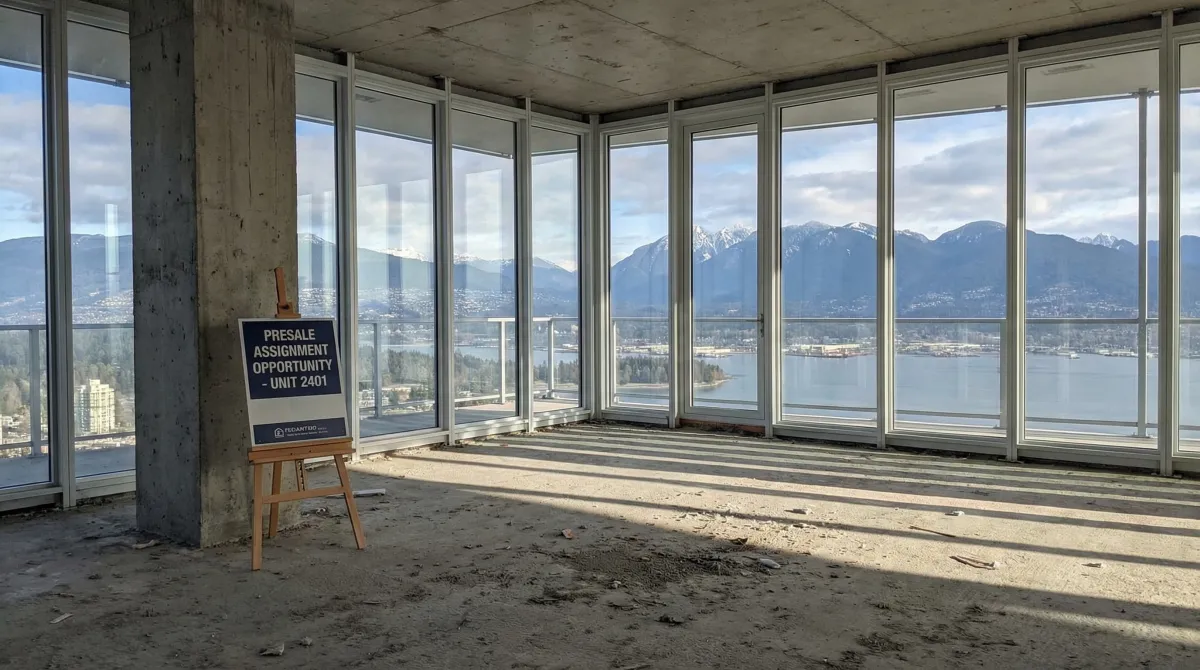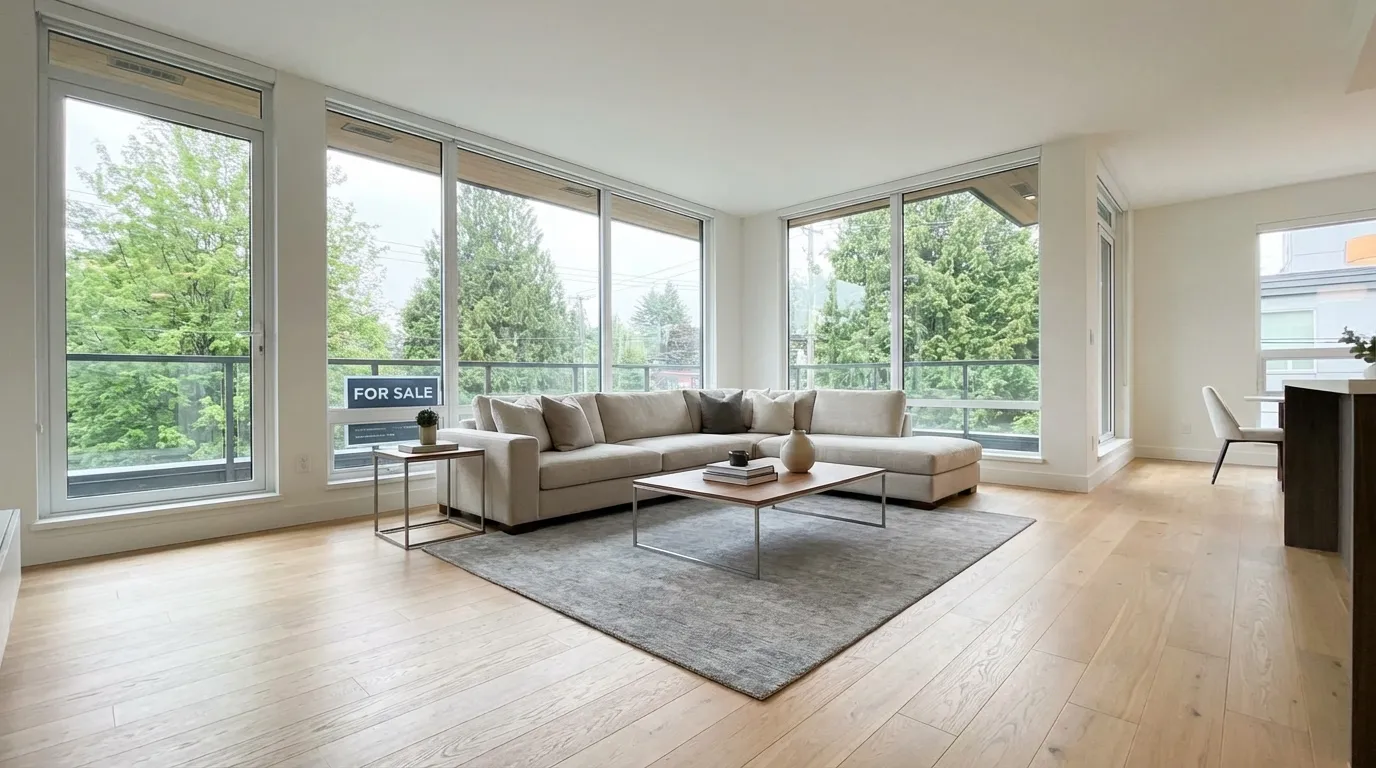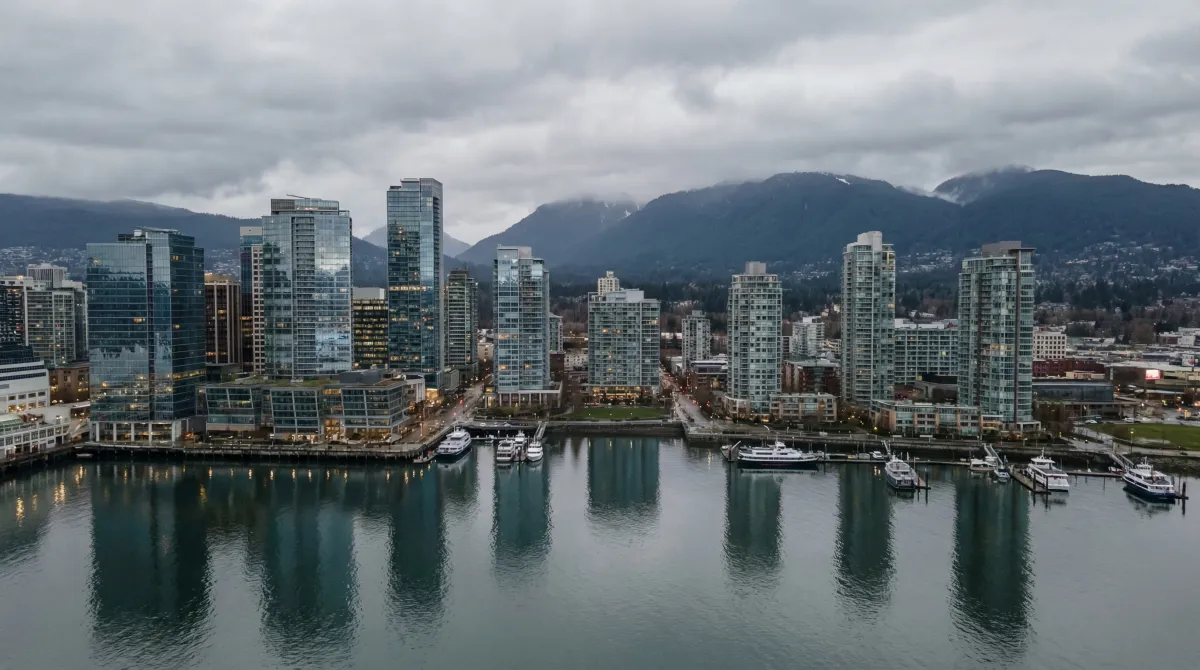
Metro Vancouver has 2,500 newly built condos sitting empty—the highest unsold inventory in 24 years. With prices down 5.9% year-over-year and investors retreating, here's why 2026 may be the best buying window for condos in a generation.
I’ve been selling real estate in Vancouver for 20 years. I’ve watched condo markets overheat, cool off, and overheat again. But I haven’t seen conditions line up for buyers like this since 2009.
There are roughly 2,500 newly built condos sitting empty across Metro Vancouver, according to CMHC. That number has doubled in a year. It’s the highest level of developer-owned unsold inventory in 24 years. Meanwhile, the condo benchmark price has dropped 5.9% year-over-year, investors are pulling back, and new mortgage rules are about to thin out the competition even more.
If you’ve been sitting on the sidelines waiting for an opening, this is what an opening looks like.
The Numbers: 2,500 Unsold Units and Counting
Let’s put the scale of this in perspective.
According to CMHC data reported by CBC News, about 2,500 completed condos are sitting vacant and unsold across Metro Vancouver. That number doubled from the previous year, and it’s the worst developer inventory picture since roughly 2001.
Real estate analytics firm Rennie estimated the number could climb to 3,493 by late 2025—a 60% jump. Given where we are now, those projections look about right.
Here’s how this shows up in the monthly data from GVR’s January 2026 report:
| Metric | January 2026 | Year-over-Year Change |
|---|---|---|
| Apartment sales | 554 units | -34.5% |
| Apartment benchmark price | $704,600 | -5.9% |
| Active listings (all types) | 12,628 | +9.9% |
| Condo sales-to-active ratio | 10.3% | Below 12% buyer’s market threshold |
Source: GVR Monthly Market Report, January 2026
A sales-to-active ratio below 12% is widely considered buyer’s market territory in Metro Vancouver. Condos have been sitting there for months. That means more inventory, less competition, and sellers who are increasingly motivated.
Why the Oversupply Happened
This isn’t one thing. It’s four or five things happening at once.
Pandemic-Era Projects Are Finally Completing
A lot of condo towers that launched during the 2020-2022 presale boom—when interest rates were near zero and everyone was buying on spec—are now completing. These projects took 3-5 years to build. The market they’re finishing into looks nothing like the market they were sold in.
Anne McMullin, president of the Urban Development Institute, told CBC that “costs have escalated so much in the last 10 years that to build a unit is out of the price range of 80 per cent of the public in the Metro Vancouver area.” That’s a jarring stat. Four out of five people can’t afford what developers are building.
Immigration Has Slowed Sharply
Canada’s federal government is cutting temporary resident admissions by about 43% between 2025 and 2026—roughly 288,000 fewer people. Permanent resident targets are capped at 380,000 annually through 2028, down from previous levels.
For Vancouver’s condo market, immigration has historically been one of the strongest demand drivers, particularly for entry-level apartments. Less migration means fewer renters, fewer first-time buyers, and less upward pressure on prices.
Investors Are Pulling Back
Rennie’s data shows the investor share of new condo projects has dropped roughly 50% year-over-year. That’s a huge shift. Pre-sale transactions fell from 11,500 in 2023 to under 10,000 in 2024, and the trend is continuing.
Why? Rising vacancy rates (more on that below), restrictive tenancy rules, and the math just not working on negative cash flow when you can earn 4% risk-free in a GIC.
Vacancy Rates Have Spiked
CMHC’s 2025 Rental Market Report showed Metro Vancouver’s vacancy rate more than doubled to 3.7%—a 30-year high. For context, this market hovered around 1% for most of the last decade.
When vacancy rates are this high, the rental income math for investor-owned condos breaks down. Rents are softening. Two-bedroom condos rent for about $2,900, but growth has slowed to below 3% annually—a 20-year low. For anyone who bought a $700,000 condo expecting 5% annual rent increases and a tight market, the spreadsheet no longer works.
Price Impact: Where Are Condos Falling?
The GVR January 2026 benchmark of $704,600 for apartments is down 5.9% from a year ago, and down 0.8% from just December. But the pain isn’t evenly distributed.
The unsold inventory is concentrated in Burnaby, Coquitlam, and parts of Surrey—exactly where the biggest condo towers went up during the boom. Burnaby South (Metrotown) benchmarks are around $776,000 with a 1.2% decline over six months. Burnaby North (Brentwood area) sits at approximately $717,000.
Royal LePage forecasts that the median condo price in Greater Vancouver will fall another 3% through Q4 2026, settling around $712,853. Their aggregate home price forecast calls for a 3.5% decline to $1,147,868.
Vancouver is one of only two major Canadian markets—the other being Toronto—where Royal LePage expects prices to decline at all. Nationally, their forecast calls for a 1% increase. In other words: the softness is specific to the condo segment in our two biggest cities.
Developer Concessions Are Real
In my day-to-day, I’m seeing something I haven’t seen in years: developers negotiating. Free parking stalls. Storage lockers thrown in. Cash-back incentives. One project in Burnaby was offering $15,000 in closing cost credits last month. These aren’t promotions—they’re signs of distress.
Some developers are returning deposits because they can’t hit presale thresholds. Others have gone into receivership. Greg Zayadi at Rennie has warned about “big ripple effects in the labour market” as this downturn works through the development industry.
What OSFI’s New Rules Mean for the Investor Exit
This one is flying under the radar, but it matters.
OSFI—Canada’s banking regulator—is introducing a new mortgage classification called IPRRE (Income-Producing Residential Real Estate) that takes effect in 2026. Here’s the short version: if more than half the income you use to qualify comes from rental revenue, your mortgage gets flagged as higher-risk.
The practical impact is significant. Under the old rules, lenders counted 80-100% of rental income toward qualifying. Under the new rules, that drops to 50-70%. For a $750,000 one-bedroom condo with 20% down, the household income required to qualify jumps from roughly $130,000 to $160,000-$175,000. That’s a 20-30% increase in required income just to buy the same property.
What does this mean for you as a buyer? Fewer investor-buyers in the market competing with you. Fewer bidding wars on entry-level condos. More listings sitting longer. In investor-heavy areas like Downtown, Metrotown, and Surrey City Centre, the IPRRE rules are one more force pushing the market in a buyer’s favour.
Where the Deals Are Right Now
Based on what I’m seeing on the ground and in the data, here are the areas and price points where the opportunity is most concentrated:
Burnaby-Metrotown corridor ($550,000-$750,000): The epicentre of the oversupply. Multiple new towers completing simultaneously, some with developer incentives. If you want a newer-build one-bedroom or compact two-bedroom, this is your best value per square foot right now.
Downtown Vancouver ($500,000-$800,000): The investor exit is real here. Older buildings (2005-2015 vintage) are seeing the most price softening as landlord-investors sell. Strata fees are typically lower in these mid-age buildings, and the location is hard to argue with.
Coquitlam ($450,000-$650,000): Strong SkyTrain access along the Evergreen Extension. New inventory that hasn’t absorbed. For a first-time buyer willing to commute, the prices here are $100,000-$200,000 below comparable Vancouver units.
Surrey City Centre ($400,000-$550,000): Still early-stage for high-rise development, but there’s inventory and there are deals. The SkyTrain connection makes it livable without a car.
The common thread: these are all areas with new inventory that hasn’t sold, elevated days-on-market, and sellers or developers who are motivated. When I say “buyer’s window,” these are the specific windows I’m talking about.
Risks to Consider
I don’t want to paint this as risk-free. It’s not. If you’re buying a condo in this market, you need to go in with open eyes.
Further Price Declines Are Possible
Royal LePage is forecasting another 3% drop through Q4 2026. If the tariff situation with the U.S. worsens, or if the economy softens more than expected, that could be 5-7%. You’re buying into a falling market, and no one can call the bottom with precision. My view: if you’re buying to live in for 5+ years, catching the exact bottom matters a lot less than getting in at a good price relative to the last five years. And on that basis, current prices compare favourably.
Strata Fees and Special Levies
Insurance premiums for Vancouver condos rose about 10% in 2025, and strata deductibles have ballooned in some buildings to $100,000-$300,000 or more. An estimated 135,000 BC condo owners face special levies averaging $7,500 per unit. Before you buy anything, read the depreciation report, the last two years of strata minutes, and check the contingency reserve fund balance. If you’re not doing this, you can check our depreciation report guide for what to look for.
The Size Mismatch Problem
A lot of the unsold inventory consists of 450-500 square foot micro-units. There’s a reason they’re unsold—many buyers want 800-1,500 square feet and are willing to pay $800,000-$1.2 million for it. If you’re looking at small studios or micro one-bedrooms, ask yourself honestly whether you’ll be happy there in three years, and whether the resale pool will be equally thin when you go to sell.
CMHC Says Fewer New Condos Are Coming
CMHC’s housing outlook notes that limited presales will mean fewer apartment condo starts over the next two years. That’s actually a positive for current inventory—less future competition. But it also means the condo segment will feel quiet for a while, which can be unnerving if you’re used to Vancouver’s historically hot market.
How to Negotiate in an Oversupply Market
This is the part where having done this for 20 years actually matters. Here’s how I approach condo negotiations in this environment:
Lead with data, not emotion. Pull comparable sales for the last 90 days. Show the seller (or developer) that you know what similar units have actually traded at—not what they’re listed for. The gap between list price and sale price is widening, and data is your leverage.
Ask for concessions beyond price. Developer offerings like free parking ($30,000-$50,000 value), storage lockers, or closing cost credits can add up to tens of thousands in effective savings. On resale, ask for appliance upgrades, early possession, or the seller covering a portion of the property transfer tax.
Don’t waive subjects. In a market with this much inventory, there is no reason to remove your inspection or financing conditions. Any seller pushing you to go subject-free in this environment is bluffing. You have time and leverage. Use both.
Know days on market. A listing that’s been sitting for 60+ days is a listing where the seller is anxious. That’s not a flaw in the property—it’s a feature for you. Units that have been price-reduced once are often open to being price-reduced again.
Consider the developer’s position. Developers carrying completed but unsold inventory are paying construction financing, property taxes, and insurance on empty units. Their incentive to deal is real and time-sensitive. Some are genuinely distressed. That creates opportunity.
Key Takeaways
- Metro Vancouver has roughly 2,500 unsold new condos—double from last year and the highest level in 24 years
- The condo benchmark is $704,600, down 5.9% year-over-year, with the sales-to-active ratio firmly in buyer’s market territory at 10.3%
- OSFI’s new IPRRE rules will reduce investor competition by requiring 20-30% more qualifying income for rental properties
- Royal LePage forecasts another 3% condo price decline through Q4 2026, and Burnaby, Coquitlam, and Surrey have the most concentrated inventory
- This is a buying window, not a buying guarantee—do your due diligence on strata fees, depreciation reports, and building age before committing
Frequently Asked Questions
How many unsold condos are there in Vancouver in 2026?
According to CMHC, approximately 2,500 newly built condos are sitting unsold and vacant across Metro Vancouver as of early 2026. This is double the number from a year ago and the highest level of developer-owned unsold inventory in 24 years. The unsold units are most concentrated in Burnaby, Coquitlam, and parts of Surrey.
Are Vancouver condo prices going to keep falling in 2026?
Royal LePage forecasts an additional 3% decline in the median condo price through Q4 2026, bringing it to approximately $712,853. The GVR benchmark already dropped 5.9% year-over-year to $704,600 as of January 2026. Whether declines extend beyond that depends on immigration policy, interest rates, and broader economic conditions. In my view, we’re closer to the bottom than the top, but nobody can time it precisely.
What is OSFI’s IPRRE rule and how does it affect condo buyers?
IPRRE stands for Income-Producing Residential Real Estate. It’s a new mortgage classification from OSFI that takes effect in 2026. If more than half of the income used to qualify for a mortgage comes from rental revenue, the property gets classified as higher-risk. Lenders will count only 50-70% of rental income (down from 80-100%), which means investors need 20-30% more household income to qualify. For non-investor buyers, the practical effect is less competition from investor-landlords.
Is it a buyer’s or seller’s market for condos in Vancouver right now?
It is a buyer’s market. The condo sales-to-active ratio was 10.3% in January 2026, well below the 12% threshold that signals buyer-favourable conditions. Condo sales fell 34.5% year-over-year to just 554 units while active listings rose 9.9%. Buyers have significant leverage on price and conditions.
Where are the best condo deals in Metro Vancouver in 2026?
The highest concentration of unsold inventory is in Burnaby (particularly the Metrotown corridor), Coquitlam, and Surrey City Centre. These areas have multiple new towers completing simultaneously. Developers in these locations are offering incentives like free parking, storage lockers, and cash-back credits. Downtown Vancouver is also seeing softening, particularly in older investor-owned units from the 2005-2015 era.
Sources
- CBC News - Warning for Vancouver Real Estate as 2500 Condos Sit Unsold, 2025
- GVR - Monthly Market Report, January 2026
- Royal LePage - Canada’s Housing Market Poised for a Reset in 2026
- Daily Hive - Metro Vancouver’s Unsold Condo Inventory Could Soar by 60%, Rennie
- Daily Hive - Metro Vancouver Rental Housing Vacancy Rate Hits 30-Year High, CMHC
- OSFI IPRRE Mortgage Rule Changes for Investors in 2026
- CMHC - Housing Market Outlook 2026
- Canada - 2026-2028 Immigration Levels Plan
- Business in Vancouver - Vancouver Home Insurance Premiums Rose Nearly 10% in 2025
- Business in Vancouver - BC Condo Owners Facing Depleted Reserves and Special Levies
Data sourced March 2026. Market conditions change frequently. Verify current figures before making financial decisions.
Next Steps: Work with Rain City Properties
If you’ve been watching the condo market from the sidelines, the numbers are telling you something. This is the most buyer-friendly condo environment I’ve seen since 2009. But knowing it’s a good time to buy and actually finding the right unit, in the right building, at the right price—those are different things.
I spend my days inside these buildings, reviewing strata documents, talking to developers, and tracking what’s actually selling versus what’s sitting. If you want someone who knows which buildings to avoid and which ones are quietly offering deals that aren’t advertised, that’s what I do.
Contact Greyden Douglas directly at (604) 218-2289 or book a call to discuss your Vancouver real estate goals.
Related Vancouver real estate pages
Continue with local service pages, neighbourhood guides, and actionable resources related to this topic.