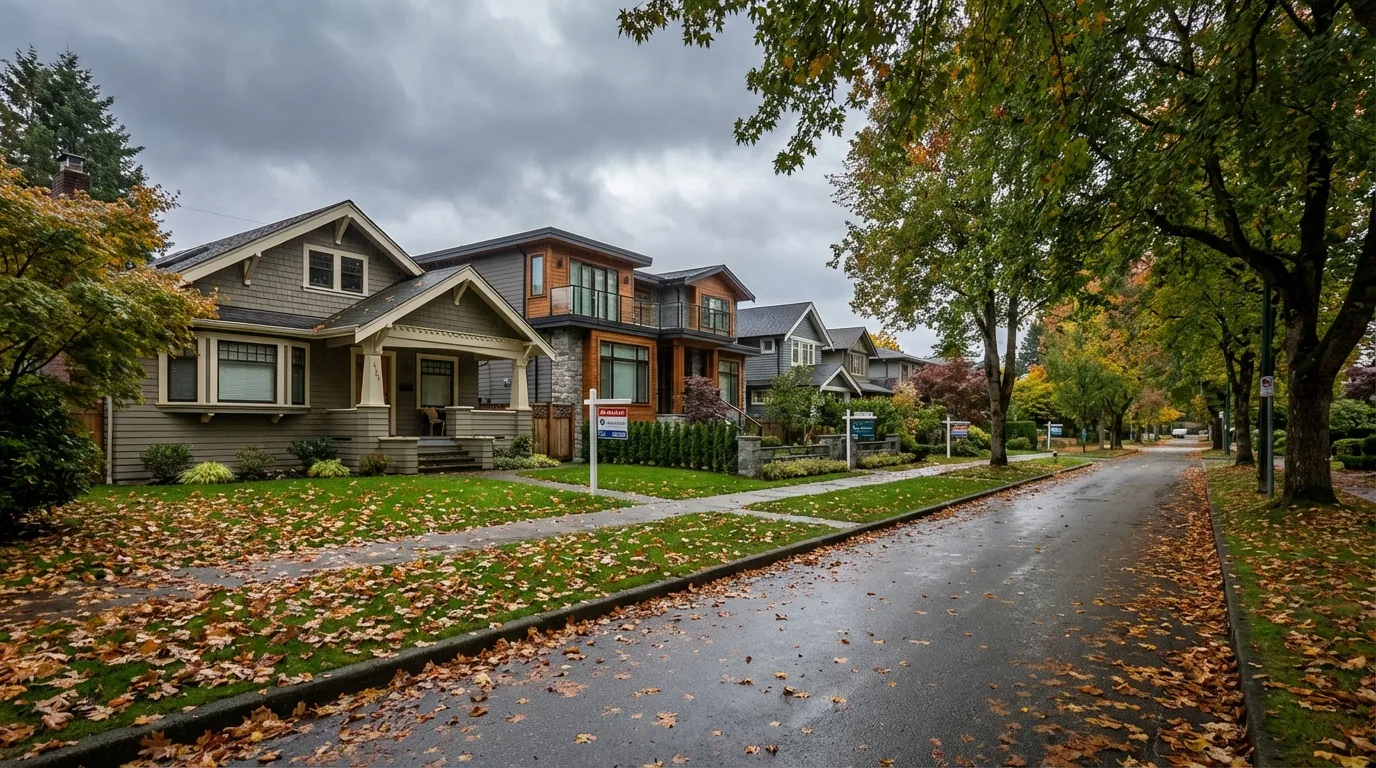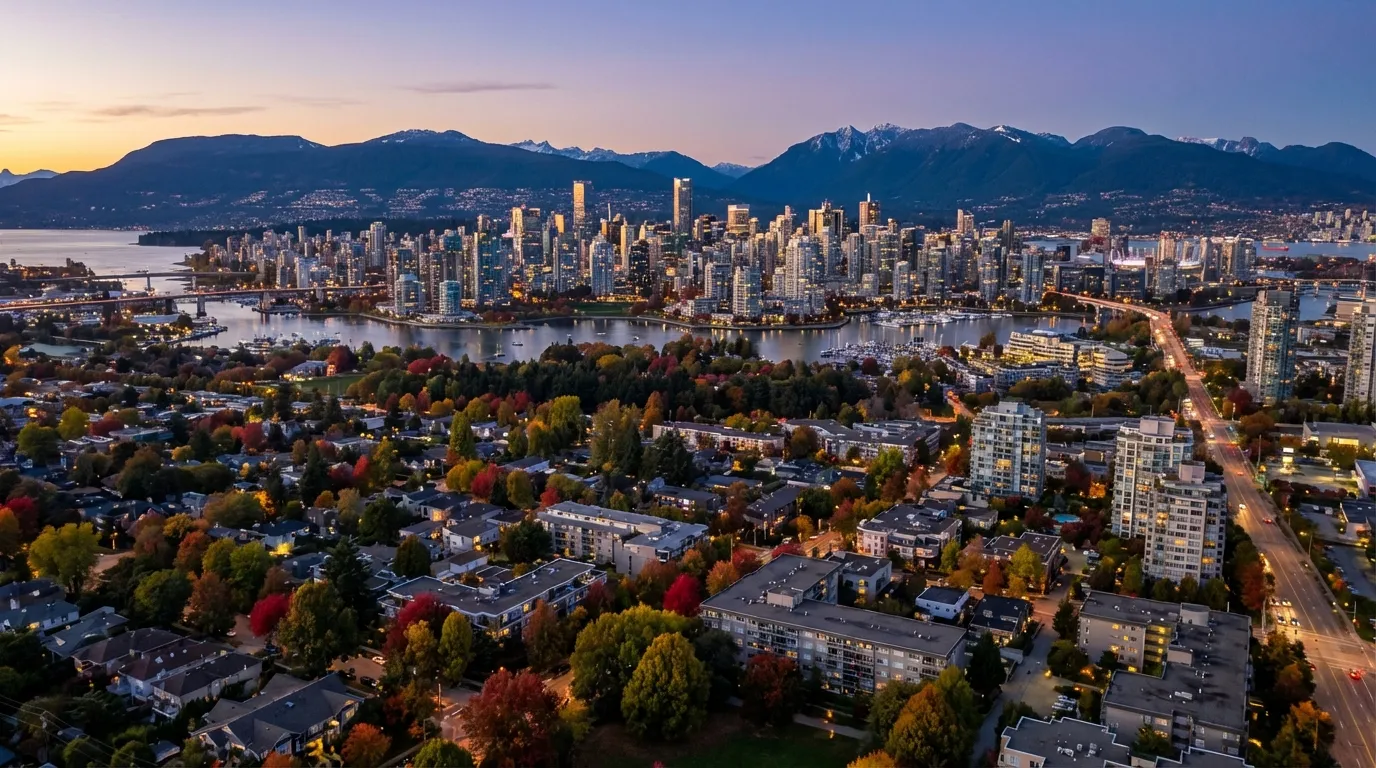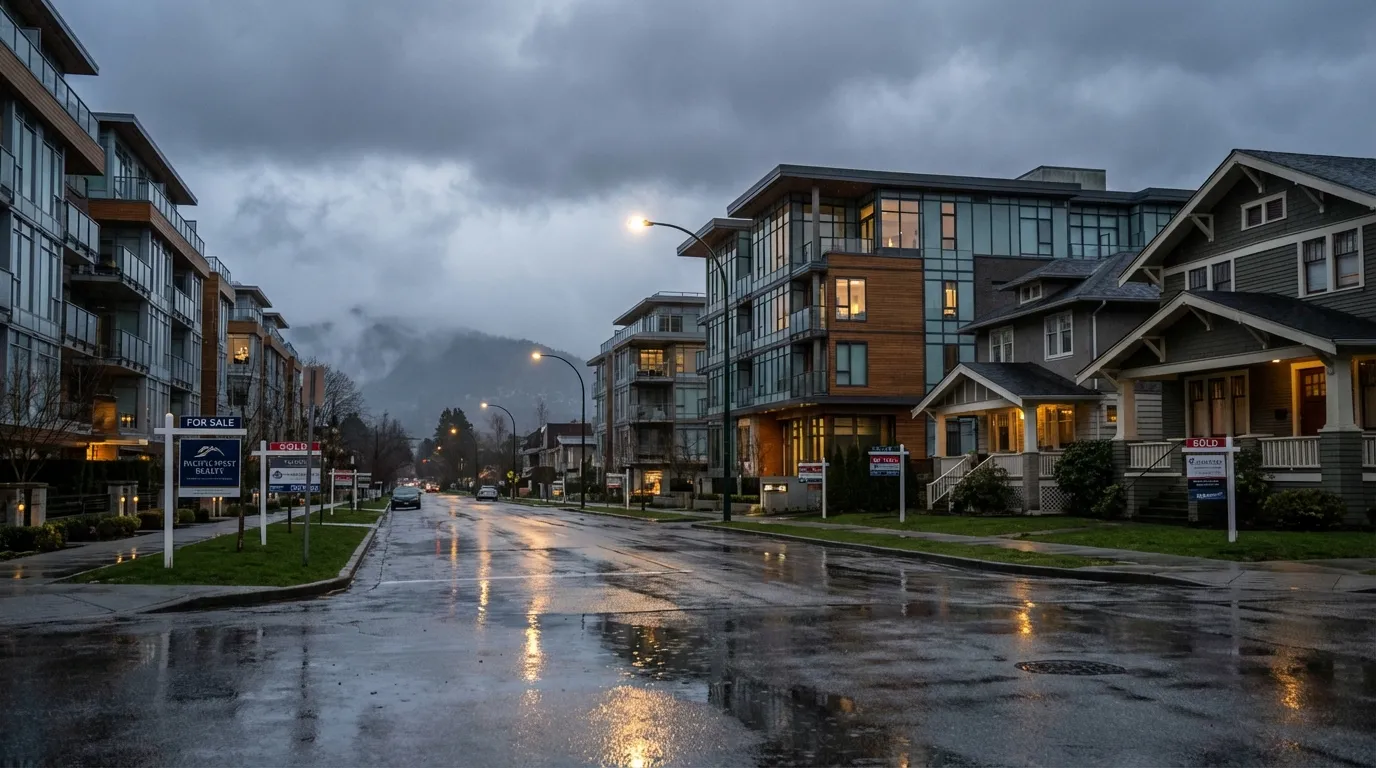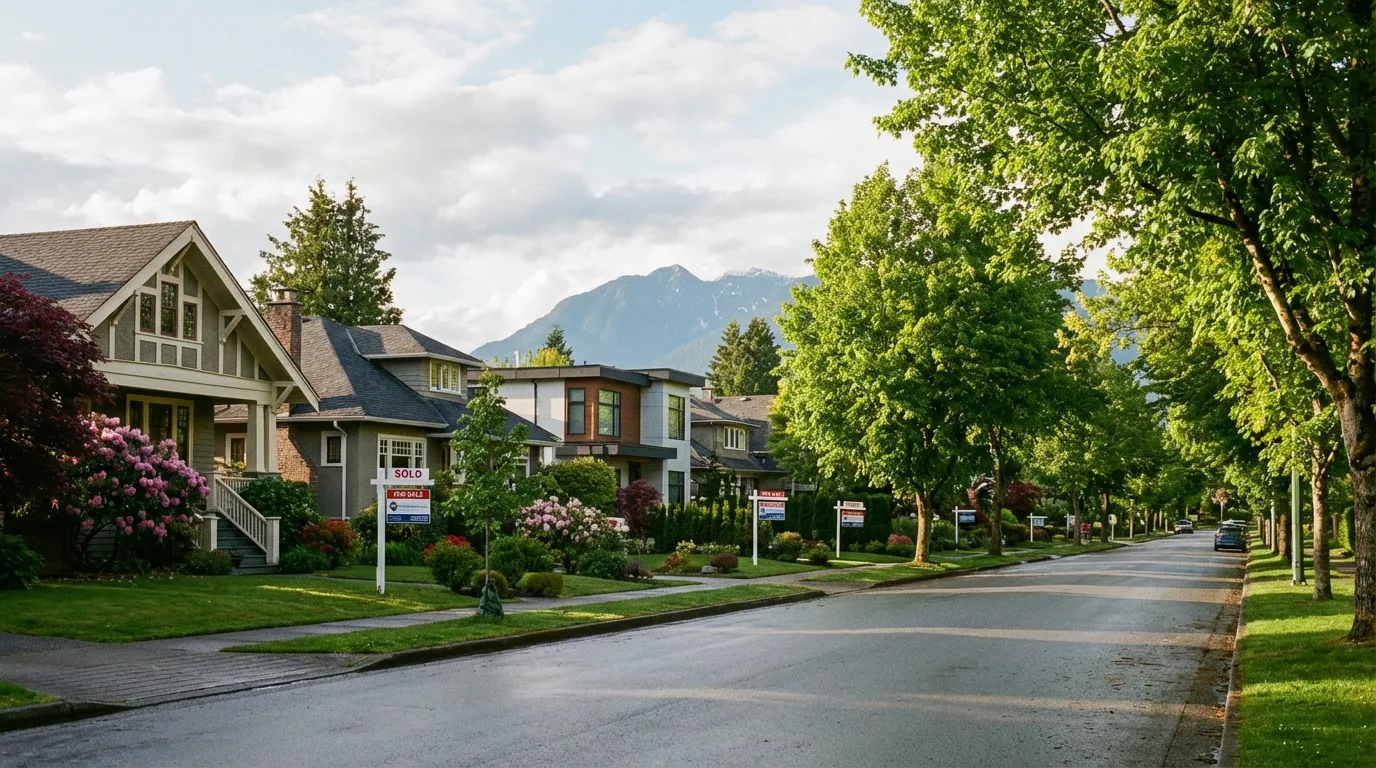
Sales are down, listings are up, and presale condos are gathering dust. After years of seller dominance, Vancouver's housing market has tilted decisively toward balance. Here is what I am seeing on the ground and where I think it goes from here.
I have been watching Vancouver real estate cycles for two decades. In that time, I have learned to distrust anyone who tells you the market only goes one direction. It does not. It swings, sometimes slowly, sometimes fast, and the people who do best are the ones who recognize the swing early enough to act on it.
Right now, we are in the middle of one of those swings. After years of frenzied seller dominance, Vancouver’s housing market has shifted to something I would call balanced with a tilt toward buyers. The data backs this up clearly, and so does what I am seeing in showings, offer negotiations, and conversations with other agents across the city.
The Sales Slowdown Is Real
In October 2025, Metro Vancouver recorded 2,255 home sales, a 14.3% decline from October 2024. That is not a soft dip. That is a meaningful pullback in buyer activity, and it extended a pattern that had been building all year.
At the same time, active listings climbed to 16,393 properties, up 13.2% year-over-year and a full 35.9% above the 10-year seasonal average. More homes for sale, fewer people buying them. That is the textbook definition of a market shifting toward buyers.
The ratio that matters most here is the sales-to-active-listings ratio. In October 2025, it sat at 14.2%. For context, anything below 12% generally signals a buyer’s market with downward price pressure. Between 12% and 20% is balanced territory. At 14.2%, we are balanced but leaning toward the lower end, and I think we will dip below 12% in slower months through 2026.
In practical terms, this means properties are sitting longer, sellers are getting fewer showings, and offers are coming in with subjects attached. If you tried to bring a subject-to-financing clause to an offer table in 2021, the listing agent would have politely told you to go home. Today, subjects are standard again.
Where Prices Have Gone
The benchmark numbers from Greater Vancouver Realtors tell a consistent story across every property type. As of December 2025:
| Property Type | Benchmark Price | Year-over-Year |
|---|---|---|
| Composite (all residential) | $1,114,800 | -4.5% |
| Detached | $1,879,800 | -5.3% |
| Townhouse | $1,056,600 | -5.0% |
| Apartment (condo) | $710,000 | -5.3% |
Source: Greater Vancouver Realtors, December 2025
I want to be direct about what these numbers mean. A 5.3% decline on a detached home priced at $1.88 million is roughly $100,000. That is not trivial. For a buyer putting 20% down, that translates to about $80,000 less mortgage debt. At current rates, that is around $450 per month in payment savings over a 25-year amortization. Real money, real impact.
For sellers, these declines are not catastrophic. We are talking about giving back roughly 12-18 months of price appreciation, depending on the sub-market. If you bought in 2020 or earlier, you are still sitting on substantial gains. But if you are listing today, you need to price honestly. The days of listing high and waiting for the market to come to you are over for now.
The Presale Market Has Essentially Frozen
The segment where the shift is most dramatic is presale condos. According to MLA Canada, only 35 presale projects launched across Metro Vancouver in 2025. That is roughly 40% below the five-year average. Fewer than 400 presale units sold during the year, an 85% drop from historical norms.
Let that sink in for a moment. The presale market, which used to be the engine of Vancouver’s development pipeline, has essentially stalled. Developers cannot sell enough units to hit their financing thresholds, so they are delaying or cancelling projects outright.
Meanwhile, approximately 3,500 completed condo units remain unsold across the region. These are finished buildings with empty units that developers are carrying at significant cost every month. Strata fees, property taxes, construction financing, it all adds up.
For buyers, this is where some of the best opportunities exist right now. Developers holding completed inventory are motivated. I have seen GST credits, decorating allowances, free strata fee coverage for a year, and in some cases, straight price reductions of 5-8% off the original list. If you want a brand-new condo without the three-year construction wait, this is your window.
Why This Is Happening
Several forces converged to produce this shift.
Rate cuts did not unlock demand the way everyone expected. The Bank of Canada cut rates seven times through 2025, landing at 2.25%. The expectation was that cheaper borrowing would bring buyers flooding back. It did not. Buyers who were uncertain about the economy, worried about U.S. tariffs, or simply burned out from years of unaffordability stayed on the sidelines.
Affordability improved, but slowly. According to BCREA, affordability has improved for six consecutive quarters. That sounds good until you realize we are improving from historically terrible levels. A $710,000 condo is more affordable than a $750,000 condo, yes, but it is still $710,000 in a city where household incomes average around $90,000.
Investor retreat. The math on investment condos stopped working. Negative cash flow, higher carrying costs, and uncertain price appreciation drove investors out of the market. When investors disappear, so does a huge chunk of presale demand, and the ripple effects hit the entire condo segment.
What the Forecasters Are Saying
BCREA’s latest housing forecast projects 78,690 residential sales across BC in 2026, a 12% increase from 2025. The average provincial price is expected to reach about $982,800, up roughly 3%.
I think that forecast is reasonable. A 12% rebound in sales sounds dramatic, but remember we are rebounding from a deeply depressed base. Even with that recovery, transaction volumes will still be below the 10-year average. And 3% price growth province-wide is modest enough that Metro Vancouver could easily see flat or slightly negative price movement through the first half of the year.
The longer-term picture is more concerning for anyone hoping prices will crash. Without significant new supply coming online, and with the presale pipeline effectively shut down, the structural housing shortage in Metro Vancouver is getting worse, not better. Some analysts have projected that long-term median prices could reach $3.9 million by 2032 if supply does not materially increase. I am skeptical of any forecast that far out, but the direction is clear: we are not building enough.
What This Means If You Are Buying
If you have been sitting on the sidelines waiting for conditions to improve, they have. You now have:
- More selection than at any point since at least 2019, with listings nearly 36% above the 10-year average
- Negotiating power to include subjects, request repairs, and push back on price
- Developer incentives on new construction that did not exist two years ago
- Stable borrowing costs with the BoC rate at 2.25% and likely holding
The one thing I would caution against is waiting for some perfect bottom. Markets do not ring a bell at the low point. By the time you are confident that prices have hit their floor, conditions will have tightened and competition will be back. The 2026 buyers market favours people who act while others hesitate.
What This Means If You Are Selling
This is the harder conversation. If you need to sell in 2026, you can still get a strong result, but strategy matters more than it did two years ago.
Price correctly from day one. Overpriced listings in this market sit, accumulate days on market, and eventually sell below where they would have if priced properly from the start. I covered this in detail in the seller’s guide, and every word of it applies right now.
Presentation matters more. With 16,000+ active listings, your home is competing for attention. Staging, professional photography, and targeted marketing are not optional extras. They are the difference between attracting serious buyers and watching your listing go stale.
Be realistic about timeline. The average days on market has stretched. If you need to sell quickly, you need to price aggressively. If you can be patient, you have more room, but do not confuse patience with stubbornness.
Key Takeaways
- Metro Vancouver’s sales-to-active-listings ratio dropped to 14.2%, putting the market squarely in balanced territory with a buyer-friendly lean
- Benchmark prices declined 4.5-5.3% across all property types by December 2025, with detached homes losing roughly $100,000 in value
- The presale market has effectively stalled: only 35 project launches and fewer than 400 units sold in 2025, with 3,500+ completed condos sitting unsold
- BCREA forecasts a 12% sales rebound in 2026 with modest 3% price growth, suggesting balanced conditions will persist through most of the year
- Buyers have the best combination of selection, negotiating power, and stable rates since at least 2019
Frequently Asked Questions
Is Vancouver still a seller’s market?
No. By the standard industry measure, the sales-to-active-listings ratio, Vancouver shifted to a balanced market in 2025. At 14.2% in October 2025, the ratio sits just above the 12% threshold that defines a buyer’s market. With inventory 35.9% above the 10-year average and sales declining, conditions clearly favour buyers more than at any point since 2019.
How much have Vancouver home prices dropped?
As of December 2025, GVR benchmark prices are down 4.5% for the composite index, 5.3% for detached homes, 5.0% for townhouses, and 5.3% for condos compared to the prior year. In dollar terms, that translates to roughly $100,000 on a typical detached home and $40,000 on a typical condo.
Should I buy a presale condo in Vancouver right now?
Completed presale inventory offers some of the strongest buyer value in today’s market. With approximately 3,500 unsold completed units across Metro Vancouver, developers are offering meaningful incentives including GST credits, strata fee coverage, and direct price reductions. If you are buying to live in, completed presale units let you move in immediately without construction risk.
Will Vancouver home prices recover?
History suggests yes, though timing is uncertain. The structural housing shortage in Metro Vancouver has not changed. Population continues to grow, land is constrained, and the presale development pipeline has slowed dramatically. BCREA projects modest price growth of about 3% in 2026, with conditions gradually tightening as more buyers return to the market.
Sources
- Greater Vancouver Realtors - October & December 2025 Monthly Statistics
- BC Real Estate Association - Q1 2026 Housing Forecast Update
- Bank of Canada - Interest Rate Decision, January 28, 2026
- MLA Canada - Metro Vancouver Presale Market Data, 2025
Data sourced February 2026. Market conditions change frequently. Verify current figures before making financial decisions.
Ready to Navigate This Market?
Whether you are buying into this balanced market or selling strategically within it, the difference between a good outcome and a great one comes down to understanding the data and knowing how to use it. I have been working Vancouver real estate for 20 years, and markets like this one reward preparation and local knowledge.
If you want to talk through what these numbers mean for your specific situation, whether that is a first purchase, a move-up, or an investment play, I am happy to walk you through it.
Contact Greyden Douglas directly at (604) 218-2289 or book a call to discuss your Vancouver real estate goals.