Vancouver homeowners have more options than ever to unlock property value. Compare multiplexes, duplexes, and laneway houses across construction costs, rental income, ROI, and overall value creation under Bill 44.
Multiplex vs Duplex vs Laneway: Which Adds the Most Value?
Vancouver homeowners in 2026 have more options than ever to unlock the hidden value in their properties. With BC’s Bill 44 transforming single-family lots into multi-unit development sites, the question isn’t whether to add density—it’s which type of density delivers the best return. This comprehensive analysis compares multiplexes, duplexes, and laneway houses across construction costs, property value impact, rental income potential, and overall ROI.
The 2026 Vancouver Development Landscape
Before diving into the comparison, it’s essential to understand the regulatory environment that makes these options possible.
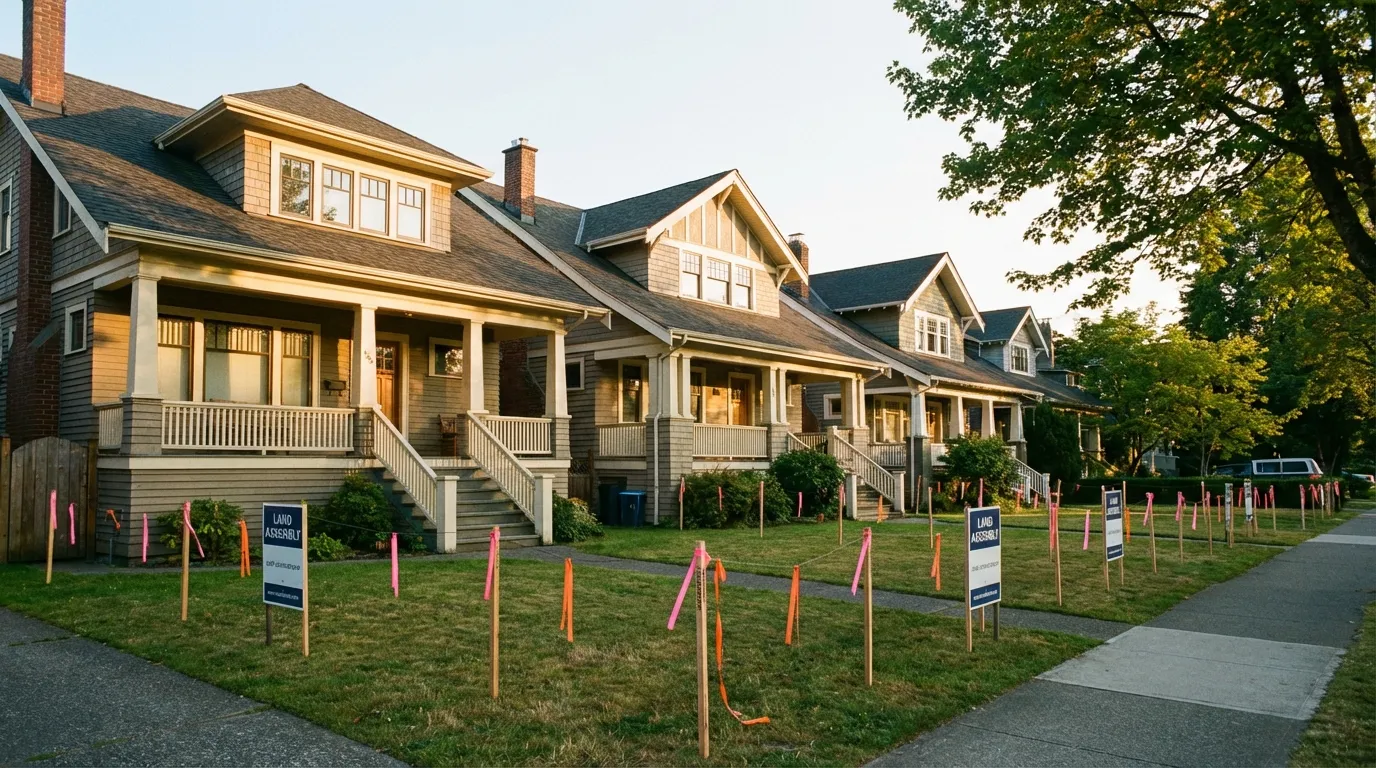
Bill 44 fundamentally changed Vancouver’s housing landscape in late 2023. The old RS (single-family) zones were retired and replaced with the R1-1 Residential Inclusive Zone across the city. This is the most significant change to Vancouver’s housing landscape in decades, allowing:
- Up to 4 units on standard lots
- Up to 6 strata units per lot for multiplex development
- Up to 8 units for secured rental projects
- Increased FSR (Floor Space Ratio) of up to 1.0 for projects with 3+ units
By the end of 2024, property purchases intended for multiplex redevelopment represented about one-third of all residential dollar sales in Vancouver—124 multiplex land sales at an average price of $2.45 million.
Option 1: Laneway House
What It Is
A laneway house is a detached secondary dwelling located at the rear of a property, typically accessed from the back lane. Under Vancouver’s rules, laneway houses can be up to 0.25 FSR, capped at 186 m² (approximately 2,000 sq ft), though most are smaller.
Construction Costs (2026)
| Cost Component | Range |
|---|---|
| Construction only | $350,000 - $550,000 |
| All-in (including permits, servicing, GST) | $400,000 - $600,000+ |
| Cost per square foot | $400 - $550+ |
A well-specified laneway in Vancouver typically finishes in the mid-$400Ks to mid-$500Ks all-in. Servicing costs—including BC Hydro connection, city water and sewer, and gas connections—are often underestimated and can add significant expense.
Important 2025 Update: Rainwater management requirements now apply to most small projects after July 1, 2025, adding to overall costs.
Property Value Impact
Laneway houses deliver solid property value increases:
- Conservative estimate: A laneway typically adds at least its construction cost to property value. A $300,000 investment might boost your appraisal by $300,000+.
- Optimistic estimate: High-quality, well-designed laneways can increase property value by 10-20%, with some experts citing up to 20% appreciation depending on size, quality, and location.
- UBC Study Finding: Research shows laneway houses affect home values primarily on Vancouver’s west side, with less impact in other areas.
Rental Income Potential
| Metric | Range |
|---|---|
| Monthly rent | $2,100 - $4,500 |
| Annual income | $25,200 - $54,000 |
| Payback period | 5-10 years |
Realistic rents of $2,100-$3,000+ per month can create compelling long-term value, especially when combined with main house rental strategies.
Key Limitations
- Cannot be stratified: Laneway houses cannot be sold separately from the main property; they’re intended for rental housing or family use only.
- Size restrictions: Maximum 2,000 sq ft limits income potential.
- Not an investment exit: You can’t sell the laneway independently to realize gains.
Best For
- Homeowners wanting supplemental rental income while staying in their primary residence
- Multi-generational families needing separate but close living spaces
- Property owners seeking moderate value increase without full redevelopment
- Those with existing homes they want to keep
Option 2: Duplex
What It Is
A duplex is a building containing two separate dwelling units, either side-by-side or stacked. Under Vancouver’s current zoning, duplexes can be strata-titled and sold as separate units, offering flexibility that laneway houses lack.
Construction Costs (2026)
| Approach | Cost Range |
|---|---|
| Conversion (existing home) | $150,000 - $250,000 |
| New construction (full build) | $1.2M - $2.0M |
| Per-unit sale price (finished) | $1.6M - $3.0M+ |
Converting an existing single-family home to a duplex averages around $150,000, according to industry data. Full duplex construction on a cleared lot costs significantly more but creates two brand-new, marketable units.
Property Value Impact
Duplexes offer the strongest flexibility for value realization:
- Sale potential: Each side of a duplex can sell for $1.6M - $2.8M depending on location and finishings. West side or new development luxury duplexes can exceed $3 million per unit.
- Land value lift: Developers actively seek duplex-capable lots, often paying 15-30% premiums over single-family market value.
- Live-in-one, sell-one strategy: Many owners live in one unit while selling the other to offset development costs.
Rental Income Potential
| Metric | Single-Family | Duplex |
|---|---|---|
| Monthly rent | $3,500 | $5,600 ($2,800 x 2) |
| Annual income | $42,000 | $67,200 |
| Income increase | — | +60% |
Key Advantages
- Stratification: Can be strata-titled and sold as separate units
- Flexibility: Live in one, rent the other; sell both; or rent both
- Lower complexity: Simpler than multiplex development
- City incentives: Additional density incentives help offset conversion and upgrade costs
Best For
- Investors seeking rental income with flexibility to sell
- Homeowners wanting to live in one unit while generating income from the other
- Those looking for “mortgage helper” arrangements
- First-time developers testing the market before larger projects
Option 3: Multiplex (Triplex, Fourplex, Sixplex)
What It Is
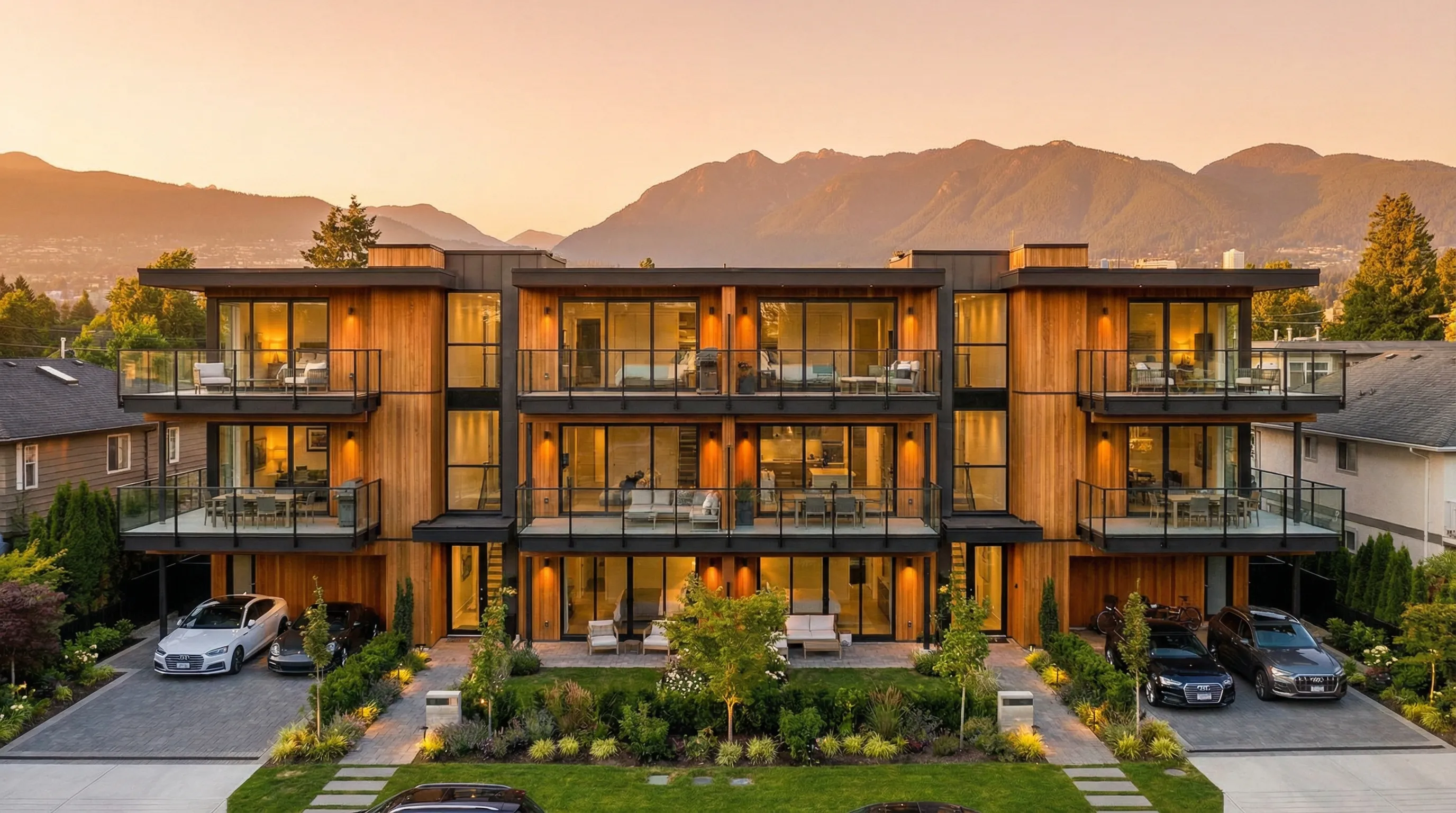
A multiplex is a residential building with three to eight units. Under Vancouver’s R1-1 zoning:
- 3 units permitted on lots under 280m²
- 4 units on standard lots (280m²+)
- 6 strata units on larger lots near transit
- 8 units for secured rental projects
Construction Costs (2026)
| Component | Cost Range |
|---|---|
| Land acquisition | $1.8M - $3.5M |
| Construction per sq ft | $275 - $550+ |
| Soft costs (permits, design) | $150K - $300K |
| Total development | $3.5M - $7.0M+ |
Additional considerations:
- Approximately $200,000 in fees and levies beyond construction
- 12+ months carrying costs during permit approval
- Servicing costs (BC Hydro, water, sewer, gas) often underestimated
Property Value Impact
Multiplexes deliver the highest potential value uplift:
- Finished unit prices: $1,050/sq ft in East Vancouver; $1,250/sq ft on the west side
- Cap rate returns: A fourplex rental property typically generates ~$19,500/month in revenue with a 4.2% capitalization rate
- Land value appreciation: Lots with multiplex potential command premiums, especially near transit corridors
City of Vancouver Assessment: For most properties, staff expect single detached houses and duplexes would continue to be the primary driver of land values. However, on larger properties and in higher-value locations, multiplex potential increases land value significantly.
Rental Income Potential
| Property Type | Monthly Revenue | Annual Gross |
|---|---|---|
| Single-Family | $3,500 | $42,000 |
| Duplex | $5,600 | $67,200 |
| Fourplex | $12,800 ($3,200 x 4) | $153,600 |
| Sixplex | $15,600 ($2,600 x 6) | $187,200 |
A fourplex generates nearly 4x the rental income of a single-family home on the same lot.
Key Advantages
- Stratification options: Units can be strata-titled and sold separately
- Maximum density utilization: Up to 1.0 FSR for 3+ unit projects
- CMHC financing: MLI Select program offers up to 95% loan-to-cost with 50-year amortization
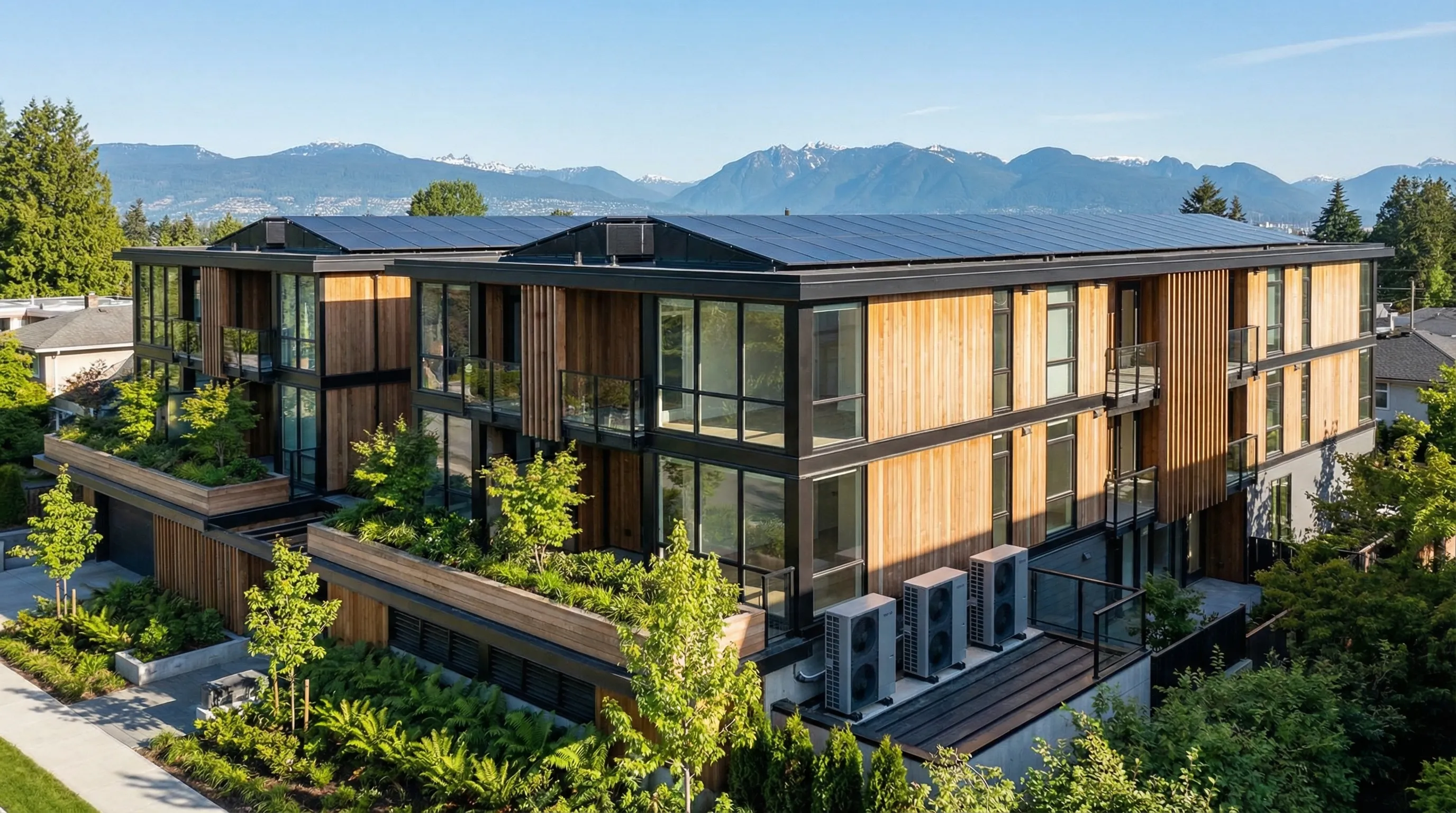
- Net Zero bonus: Developers meeting Net Zero standards can gain 19% additional floor area for applications submitted by end of 2025
- Faster timeline: City zoning policy enables 9-12 month permit timelines—faster than many other building forms
Key Challenges
- Higher capital requirements: $2.5M+ minimum investment
- Construction complexity: 18-28 month development timeline
- Expertise required: Need specialized team (architect, builder, financing)
- Market risk: Larger exposure if rental market softens
Best For
- Serious investors seeking maximum returns
- Developers building portfolio scale
- Homeowners willing to relocate during 18-28 month construction
- Those with access to construction financing or development partnerships
Head-to-Head Comparison
| Factor | Laneway House | Duplex | Multiplex |
|---|---|---|---|
| Construction Cost | $400K - $600K | $150K (conversion) - $2M (new) | $3.5M - $7M+ |
| Property Value Add | 10-20% | 15-30% premium + unit sales | Highest total value |
| Monthly Rental Income | $2,100 - $4,500 | $5,600 | $12,800 - $19,500 |
| Can Sell Separately | No | Yes | Yes |
| Keep Main Home | Yes | Possible | No (redevelopment) |
| Timeline | 8-12 months | 12-18 months | 18-30 months |
| Complexity | Low | Medium | High |
| Capital Required | $400K - $600K | $150K - $2M | $2.5M+ |
| Best ROI Scenario | Supplement income, keep home | Flexibility + income | Maximum absolute returns |
Which Option Adds the Most Value?
For Absolute Dollar Value: Multiplex Wins
If your goal is maximizing total value creation, a multiplex delivers the highest returns. Converting a $2M single-family lot into a $6-8M multiplex development creates $4-6M in gross value—far exceeding what a laneway or duplex can achieve.
The numbers: A fourplex generating $153,600 annual rental income at a 4% cap rate values at $3.84M just for the building, plus land appreciation.
For Value-to-Effort Ratio: Duplex Wins
Duplexes offer the best balance of value creation, flexibility, and manageable complexity. You can:
- Live in one unit while the other pays your mortgage
- Sell one unit to fund the project, keeping the other
- Convert an existing home for $150K instead of full redevelopment
- Exit completely by selling both units
The flexibility advantage: Unlike laneways (can’t sell separately) or multiplexes (all-or-nothing redevelopment), duplexes let you adjust strategy mid-stream.
For Preserving Your Home: Laneway Wins
If you love your current home and neighbourhood, a laneway house lets you stay put while adding 10-20% to property value and generating $25,000-$54,000 in annual rental income. No other option preserves your primary residence while adding meaningful density.
The lifestyle factor: For multi-generational families, a laneway provides independent living space for parents or adult children while maintaining family proximity.
Making Your Decision: Key Questions
-
Do you want to keep your current home?
- Yes → Laneway house
- Flexible → Duplex conversion
- No attachment → Multiplex
-
What’s your available capital?
- Under $600K → Laneway house
- $600K - $2M → Duplex
- $2.5M+ → Multiplex
-
Do you need the ability to sell units separately?
- Yes → Duplex or multiplex
- No → Laneway is fine
-
What’s your timeline tolerance?
- Under 12 months → Laneway house
- 12-18 months → Duplex
- 18-30 months → Multiplex
-
How much complexity can you manage?
- Minimal → Laneway house
- Moderate → Duplex
- Full development project → Multiplex
The Bottom Line
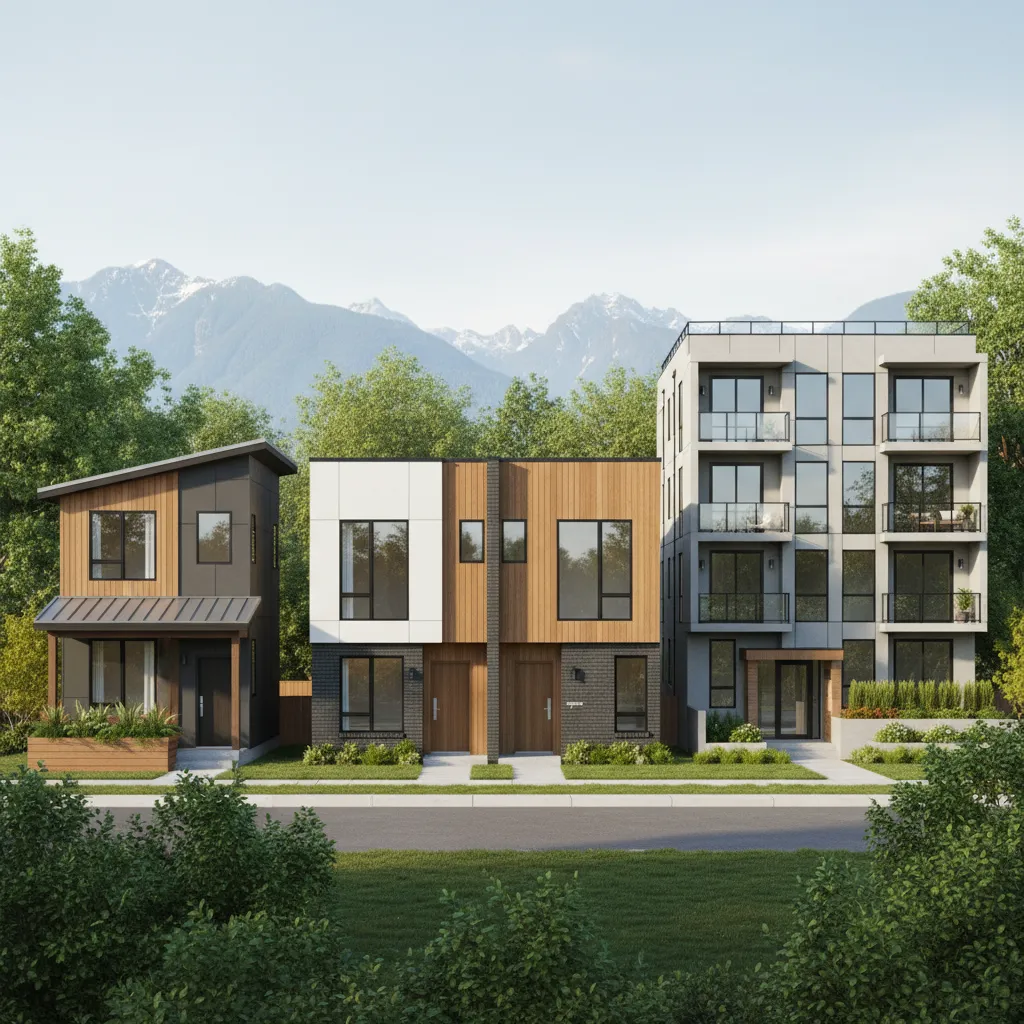
There’s no universal “best” option—only the best option for your specific situation. Here’s the framework:
-
Build a laneway if you want to stay in your home, add moderate value, and generate supplemental income with minimal disruption.
-
Develop a duplex if you want flexibility, solid returns, and the option to sell one unit while keeping the other—or convert your existing home without full demolition.
-
Build a multiplex if you’re ready for full-scale development, have access to capital and expertise, and want to maximize absolute returns regardless of complexity.
The Vancouver market in 2026 rewards density. Bill 44 has created opportunities that didn’t exist three years ago. The question isn’t whether to add value through additional units—it’s choosing the path that matches your goals, capital, and risk tolerance.
Next Steps
Evaluating your property’s potential requires site-specific analysis. Lot dimensions, transit proximity, tree coverage, and neighbourhood comparables all affect which option delivers the best returns for your situation.
At Rain City Properties, Greyden Douglas specializes in helping Vancouver homeowners navigate these decisions. Whether you’re considering a laneway addition, duplex conversion, or full multiplex development, start with a property assessment to understand your specific opportunities.
Ready to explore your options? Contact Rain City Properties for a personalized analysis of your property’s development potential.
Related Vancouver real estate pages
Continue with local service pages, neighbourhood guides, and actionable resources related to this topic.